



MARC THIERRY
15 articles published in Tangente
 History and CultureN°90May 06, 2024
New numbers with Richard Dedekind
The real numbers include the rational numbers—the quotients of two integers—and the irrational numbers, of which √2 and π are two well-known examples. This gives us one way of classifying the reals. But another classification is possible, based on numbers known as algebraic numbers.
Read → Math for everyoneN°87Aug 24, 2023
And order was established
The notion of order is part of our daily lives, whether we are putting objects away, comparing quantities or deciding what order to tackle a series of tasks in. Yet it took a very long time for these natural activities to be conceptualized mathematically.
Read → History and CultureN°85Feb 17, 2023
Properties of the arithmetic triangle
Although Blaise Pascal did not invent the triangle that bears his name, the name pays tribute to his study of it in a treatise that has remained famous in the history of mathematics. Let's delve into this extraordinary text!
Read → History and CultureN°85Feb 17, 2023
Pierre de Fermat, a famous contemporary
Who was Pierre de Fermat? Pascal regarded him as the greatest mathematician of his time. He was a very modest man, probably aware of his extraordinary mathematical abilities, who readily shared his often original ideas. We know that he was a man of great learning, capable of translating works from Latin and Greek and writing sophisticated poetry, even… in Spanish.
Read →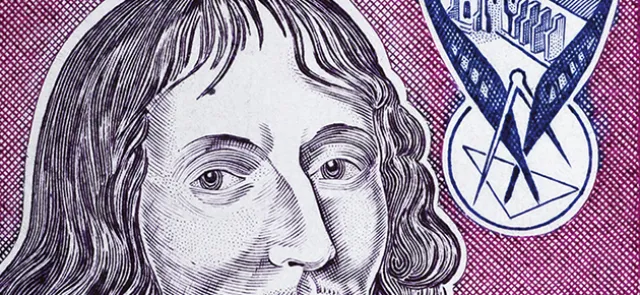 History and CultureN°85Feb 17, 2023
A master of mathematical induction
Mathematical induction is a major tool in mathematical proofs. On at least three occasions, Pascal explicitly uses reasoning that is "almost" mathematical induction, making him one of the method's inventors.
Read → History and CultureN°85Feb 14, 2023
The Centre international Blaise-Pascal
Among its missions, the Centre international Blaise-Pascal is compiling a comprehensive bibliography of research on Blaise Pascal.
Read →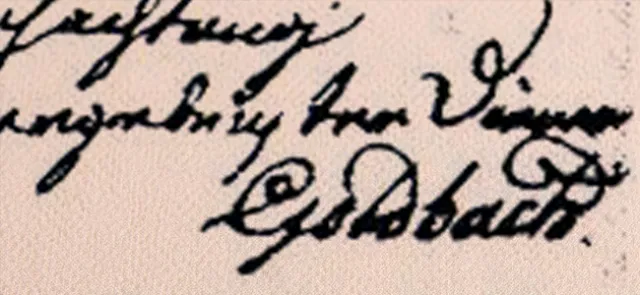 History and CultureN°209Dec 22, 2022
A passion for Goldbach's conjecture
In set theory, which Cantor founded, intuition has little place. Yet his approach to open mathematical problems relied more on intuition than on rigorous reasoning. His interest in Goldbach's conjecture is a case in point.
Read → Math for everyoneN°84Nov 21, 2022
The beautiful geometry of sangaku
A sangaku was originally a Japanese wooden votive tablet. It sometimes bears an engraved geometric figure with the statement of a problem, together with the solution or sometimes a hint.
Read → Math for everyoneN°207Aug 19, 2022
An abstract concept: filters
The concept of a filter, developed by the French mathematician Henri Cartan (1904–2008) and anticipated by the Polish mathematician Alfred Tarski (1901–1983), can be regarded as a generalization of the notion of the limit of a sequence of real numbers.
Read → Math for everyoneN°207Aug 19, 2022
Category theory, an "abstract nonsense"?
The essence of modern mathematics is abstraction, especially since the 1930s with the emergence of the concept of structure. But as early as the 1940s a new concept appeared: categories, accompanied by the ideas of functor and natural transformation.
Read → Math for everyoneN°207Aug 19, 2022
From "concrete" algebra to "abstract" algebra
In the twenty-first century, the idea of "concrete" algebra seems paradoxical: for everyone—high school students, university students, and teachers alike—this discipline is essentially abstract, devoted to the study of structures (groups, rings, fields, modules, possibly ordered sets…). This was not always the case.
Read → History and CultureN°82May 19, 2022
Beyond Lagrange's memoir
As a teenager, Galois read Legendre and Lagrange, followed by Gauss and Cauchy. He often cites the latter two, but rarely Lagrange. Galois was clearly influenced by Lagrange's ideas; he would, however, go much further, benefiting from all the advances made since 1771.
Read →