It was while seeking to understand the nature of π that Heinrich Lambert proved in 1767 that it is irrational (see "A number beyond reason"). But does π have another special property?
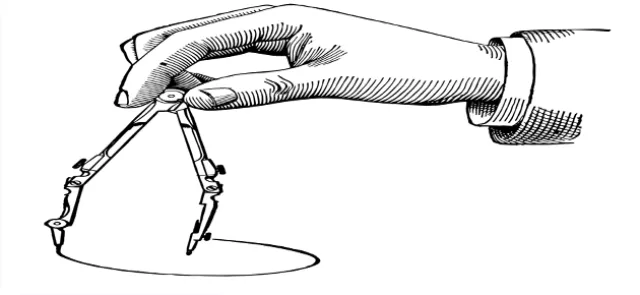
At around the same time, mathematicians were also tackling problems of straightedge-and-compass construction, particularly the quadrature of the circle: how can these tools be used to construct a square with the same area as a given disk?
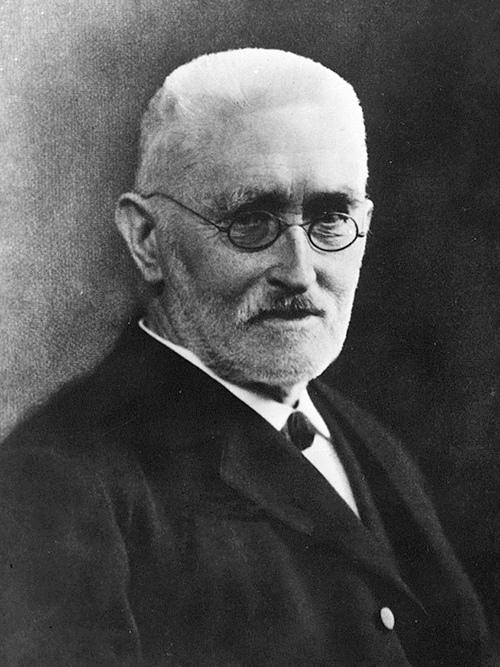
In 1837, Pierre-Laurent Wantzel characterized the equations whose roots include numbers constructible in this way (see "When algebra meets geometry"). More generally, could π be a root of a polynomial equation with integer coefficients? It was conjectured that it could not, but Ferdinand von Lindemann did not prove this until 1882 (see "A number beyond reason"). Meanwhile, the study of numbers that are roots of polynomial equations developed, and Richard Dedekind would formalize it in the 1870s.