China's "Big Brother"
--------------------------
Identity checks can now be carried out automatically at airports using facial recognition. You place your passport on a reader, and a camera checks that it really is yours.
More intrusively, some police officers in China wear camera-equipped glasses that enable them to arrest wanted people. Similarly, surveillance cameras monitor students' attention in some schools or tell off pedestrians in real time for crossing against a red light. Facial recognition is even being used to combat excessive toilet-paper use at tourist sites: you are allowed 60 cm every nine minutes, not a millimeter more. All these advances make us wonder whether China might be inventing a "Brave New World" surpassing the combined imaginations of Aldous Huxley and George Orwell...
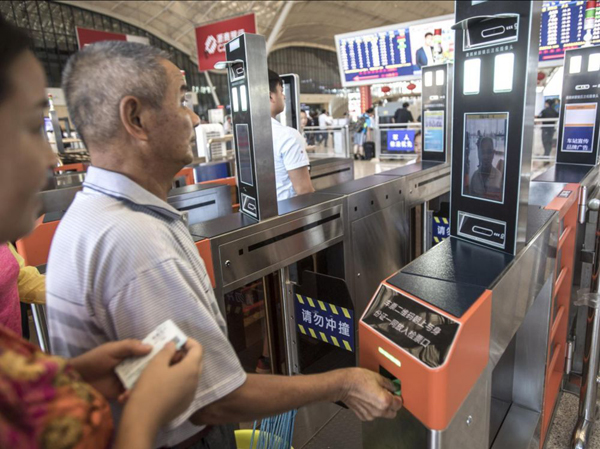
Identity check in China.
Keeping armed robots under control
--------------------------------
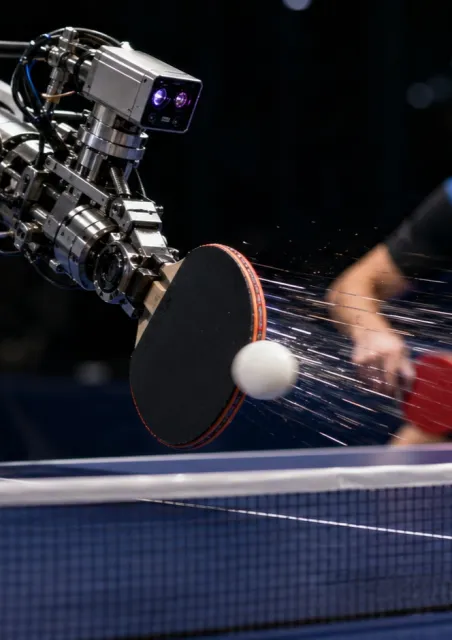
Some robots—whether airborne or ground-based—are already armed, but a human operator retains remote control over the use of their weapons. These robots make targeted military operations possible while limiting risks to humans—at least for the state or organization operating them.
Although the artificial intelligence embedded in a robot can help select a target through facial recognition or analysis of its behavior, the robot itself cannot make that decision. The weapon remains under human control. Yet it would be easy to switch these robots, already developed in several countries including Russia, the United States and France, to autonomous mode. The United Nations is therefore working toward a ban on what it calls LAWS (lethal autonomous weapons systems). But agreement on that may be some way off...

Russia is actively working to make its T-14 Armata tank autonomous.
The invisible hand of AI
-------------------------
The start-up Geophy inspired Guillaume Erner's September 26, 2018 commentary on France Culture. Geophy specializes in collecting real estate prices and has a database of more than 200 million properties. Today, it is easy to imagine that a data center operated by Geophy or someone else could eventually have real-time information on the value of every home throughout the world. Artificial intelligence could then study how those values change and the mechanisms behind them in order to set prices. It would do so more efficiently than the "invisible hand of the market," since AI would have more complete information and greater analytical capabilities than the mere aggregation of individual preferences. A potential new kind of "planning," prompting Guillaume Erner to conclude with an amused smile: "What if the Soviet Union were the ultimate stage of computing?"
*

*