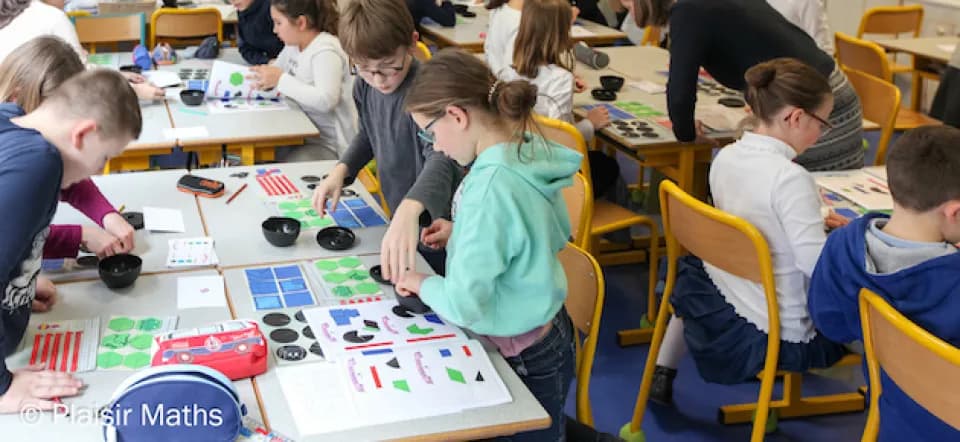
Mathematics isn't dreary, so why teach it as though it were? "Playing mathematical games in class isn't serious," some say. So what? You don't have to be grim to be an effective teacher—quite the opposite! The task is to win students over to the workings of mathematics. Parents will be convinced when they see how well this approach works for their child.
-
Games and teaching: the guiding principles
---------------------------------------
But a word of caution: bringing games into teaching calls for a few guiding principles. The first is this: students must not be forced to play, or it is no longer a game. They need to want to play, which means creating an intermediate space between reality and imagination where they will learn to take risks, try their luck, devise strategies and describe them—in short, to exist.
Nor should games be imposed on teachers. They need to be convinced that using games will make their job easier, without concealing the difficulties inherent in a different approach: coping with an unforeseen situation, finding another way to explain something, being willing to search for an answer in front of the class, and learning when to remain silent or, conversely, to open a dialogue.