From the Middle Ages onward, European mathematicians collected "wandering questions" (Fibonacci, 1204) and "games and diversions" (Nicolas Chuquet, 1484). In the 17th century, "mathematical recreations" emerged as a genre in their own right, unleashing a flood of collections of arithmetic or geometric problems described as pleasant, delightful or amusing. The best known are those of Claude-Gaspard Bachet de Méziriac (1612), the collection attributed to Jean Leurechon (1624), and Jacques Ozanam's great compilation (1694), which remained unrivalled until Édouard Lucas published his own two centuries later.
It is difficult to define a mathematical recreation. Often it is a pseudo-realistic problem, utterly implausible yet dressed up to amuse, arouse curiosity or provoke surprise. In our view, a successful recreation should make people want to share it and tell it to those around them. This calls for a simple, engaging, finely crafted statement that is easy to remember. In this sense, the genre also becomes a literary exercise.
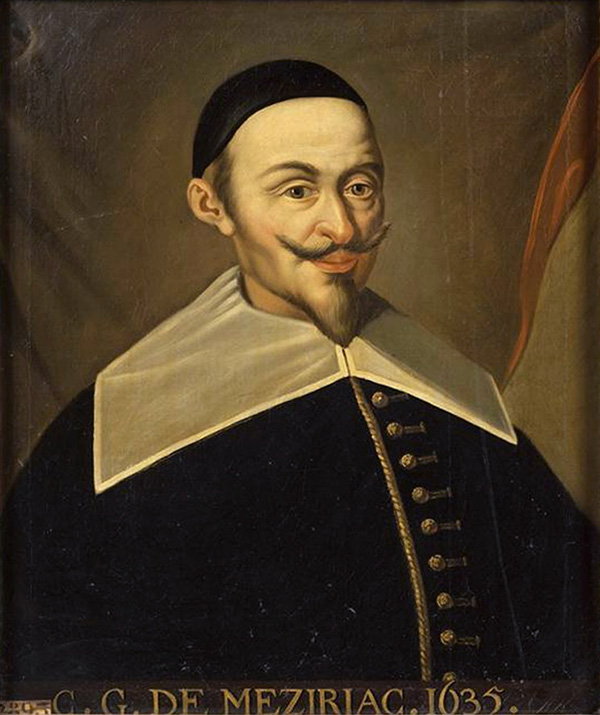
Claude-Gaspard Bachet de Meziriac,
anonymous oil on canvas, Palace of Versailles.