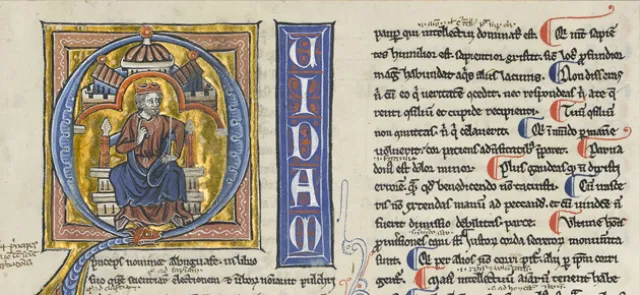
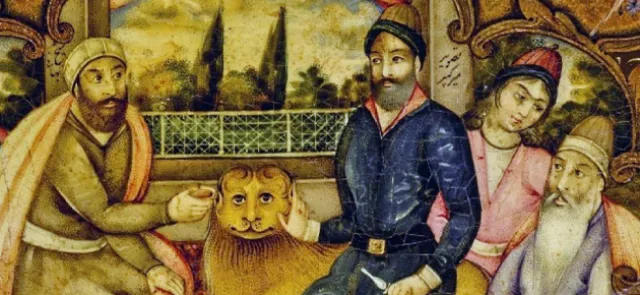
Arabic-Latin translations in mathematics in the 12th century represent a major turning point in the intellectual history of the medieval West. During this period, a vast corpus of scientific knowledge, particularly in mathematics, preserved, developed and enriched by scholars of the Islamic world, was transmitted to Western Europe through an intense process of translation. This phenomenon, which peaked in the 11th and 12th centuries, allowed the West to rediscover the treasures of Greek and Hellenistic antiquity while incorporating the advances made by Arab, Persian and Indian mathematicians.
The transfer of mathematical knowledge to the Christian West took place mainly through the regions of contact between the Islamic world and Europe, such as the part of the Iberian Peninsula under Muslim rule (known as al-Andalus, see the article), Sicily and southern Italy. These territories, then ruled in the name of Islam or maintaining close relations with the Islamic world, became cultural bridges between the two civilizations. It was in this context that many European scholars traveled to the great cities of Muslim Spain. Undoubtedly, one of the most emblematic centers of this movement was Toledo, reconquered by the Christians in 1085. The city quickly became a crossroads where Christian, Jewish and Muslim scholars collaborated on the translation of scientific and philosophical texts. Cordoba and Seville also played an important role.
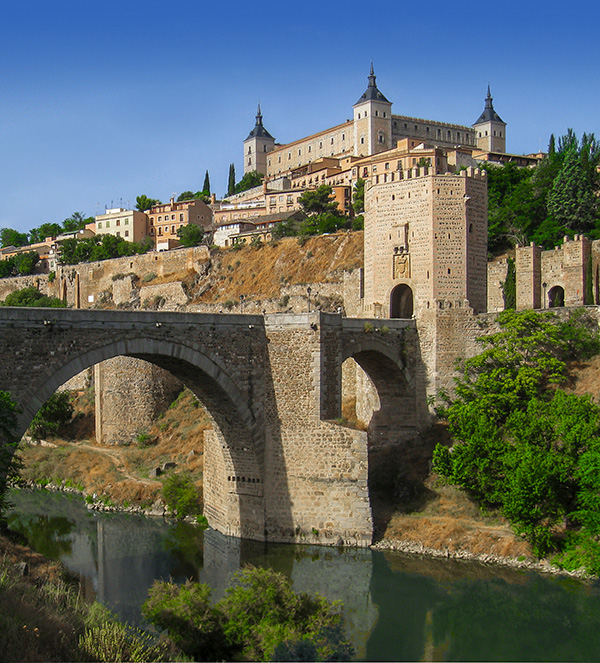
The Alcázar of Toledo and the Alcántara Bridge over the Tagus.
Three main stages
--------------------------