For a long time, the golden age of Arab-Muslim science was thought to span the 9th to the 13th century. It was believed that once the major Arabic texts had been translated into Latin, science had shifted shores and moved into the universities of the north. The decline of science in the lands of Islam was explained by the influence of the theologian Muḥammad al-Ghazzālī (11th century), who was hostile to philosophy in the Greek tradition and very wary of secular sciences, and it was thought that the catastrophic destruction of Baghdad by the Mongols in 1258 had sealed their death warrant. Historians of science have since realized, however, that significant scientific activity continued in Arabic after that date, in other regions of the Muslim world.
The convention most commonly used today is therefore to extend this famous "golden age" up to the 15th century, and this is especially true in the case of mathematics. Conveniently, the only two names of Arabic-speaking mathematicians known, rightly or wrongly, to every high-school student, those of al-Khwārizmī (Baghdad, 9th century) and al-Kāshī (Samarkand, 15th century), symbolize its beginning and its end.
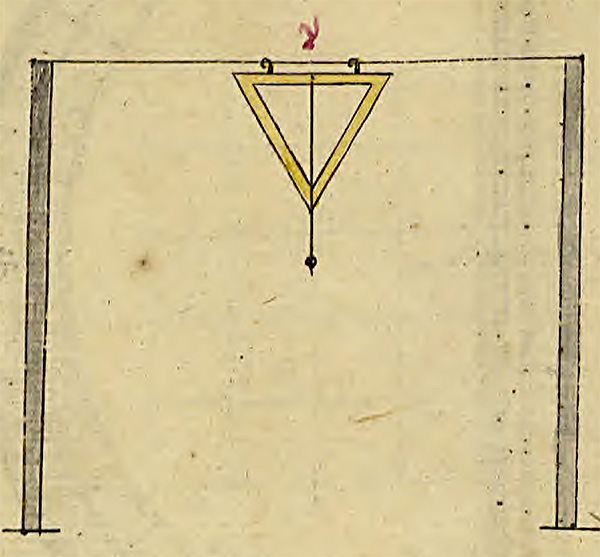
Depiction of an aerial kūniyā in The Convert's Offering
(Hadiyyat al-Muhtadī) by Osman Efendi. Istanbul, Military Museum, MS 3027.