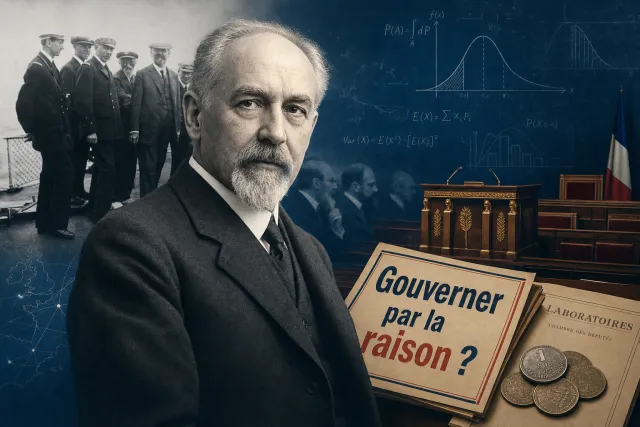
The Covid-19 pandemic revived an old idea with unprecedented force in public opinion: that the political class is incompetent when faced with the complex management of subjects that only scientists truly master. The explicit idea then is that the reins of politics should be handed over to experts and scholars. This is an old idea, and strong traces of it can be found, for example, in Plato and Xenophon, or more recently in Francis Bacon (1551-1626) with his New Atlantis (1626).
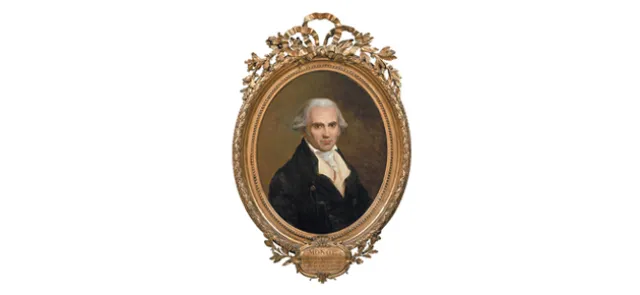
Nevertheless, our contemporary way of conceiving this tension between the political class and the class of scholars actually goes back, generally without our even knowing it, to a much more recent thinker: Claude-Henri de Rouvroy de Saint-Simon (1760-1825). Quick to oppose the aristocracy he was born into, a jack-of-all-trades keen on science and philosophy, enlisted at seventeen in the American army of liberation alongside La Fayette (1757-1834), where he was taken prisoner by the English, penniless before the Revolution and then extremely wealthy thanks to shrewd speculation on Church property, Saint-Simon is the author of a monumental body of work. He saw his own enrichment not as an end in itself but as a means of improving the nation's lot (through science and industry), and envisioned a complete reform of politics in L'Organisateur, a work published between November 1819 and February 1820.
Who should legitimately govern?
-------------------------------
From the very first pages, Saint-Simon presents what has come to be known as the "Saint-Simon parable" (see box). It comes in two parts. The first imagines a France that would suddenly lose its 3,000 best productive citizens: physicists, mathematicians, artists, engineers, merchants, farmers, workers... This would be a catastrophe from which the nation would take more than a generation to recover, since a new elite would have to be trained.
The second imagines the loss, this time, of its 30,000 most important members in terms of social hierarchy: ministers, bishops, civil servants, as well as the wealthiest citizens. He concludes that "no political harm would result for the State"!