



ANTOINE HOULOU-GARCIA
62 articles published in Tangente
 NewsN°230Jul 03, 2026
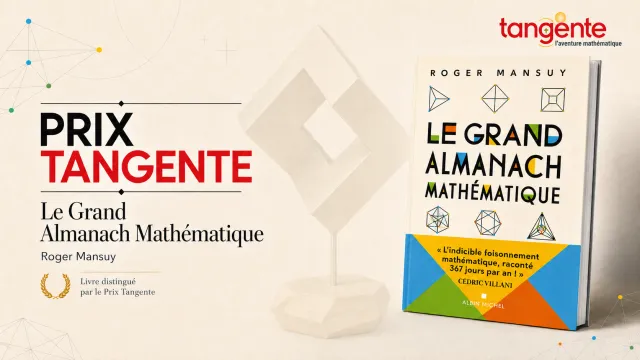
The 2026 Tangente Prize awarded to Roger Mansuy
The 2026 Tangente Prize was awarded to Roger Mansuy for his Grand almanach mathématique, at the Salon culture et jeux mathématiques in Paris.
Read →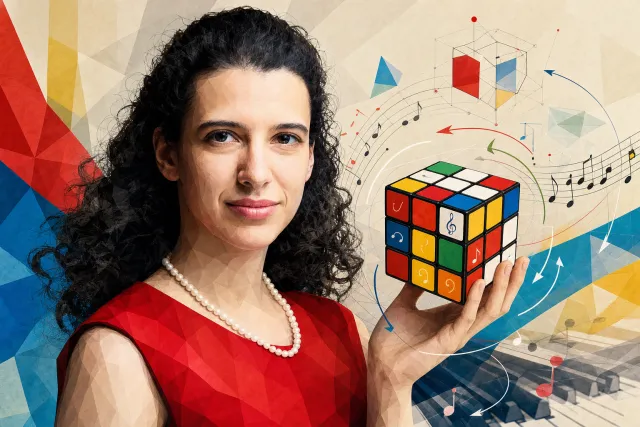 CuriosityN°230Jun 25, 2026
Making algebra audible with the CubeHarmonic
Invented by Maria Mannone, the CubeHarmonic uses a Rubik's Cube to create musical harmonies and teach algebra intuitively.
Read →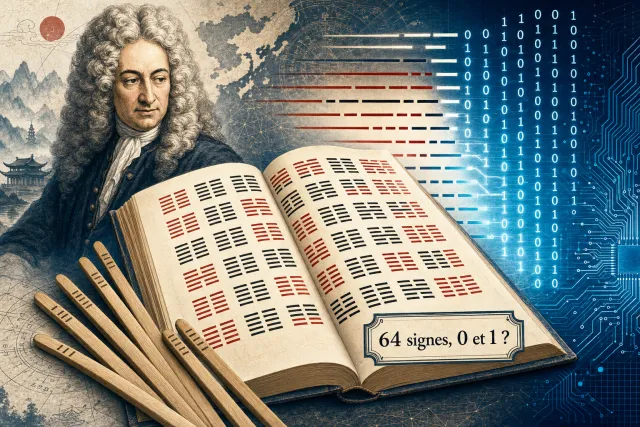 History and CultureN°98Jun 08, 2026
Leibniz and the Yi Jing: when binary meets Chinese divination
Discover how Leibniz found a forerunner of the binary system that would revolutionize modern computing in the Chinese Book of Changes.
Read → N°228Feb 14, 2026
The 2026 Tangente Prize shortlist
Each year, the Tangente Prize is awarded to a book that inspires a broad readership to explore mathematics and see it in a new light.
Read →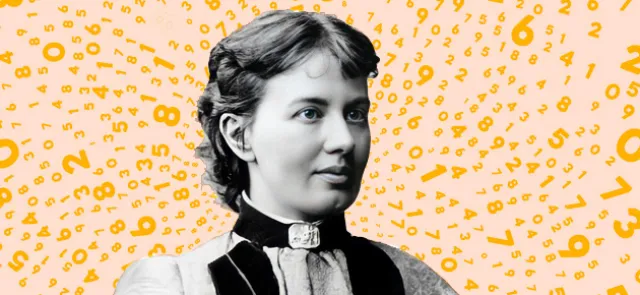 N°97Feb 12, 2026
Sofia Kovalevskaya, from poetry to mathematics
Sofia Kovalevskaya was not only a great mathematician but also a socially engaged writer, drawn to poetry from a very early age. This dual calling makes her a figure apart.
Read →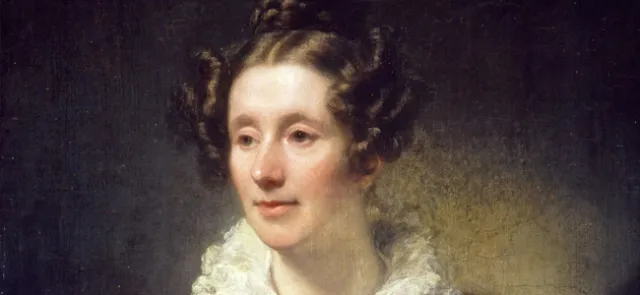 N°97Feb 12, 2026
Mary Somerville: a European career
Mary Somerville's life reveals how personal choices, encounters and sheer hard work could turn a woman into a true star of mathematics, while her passion for the subject remained undimmed until the age of ninety-two.
Read →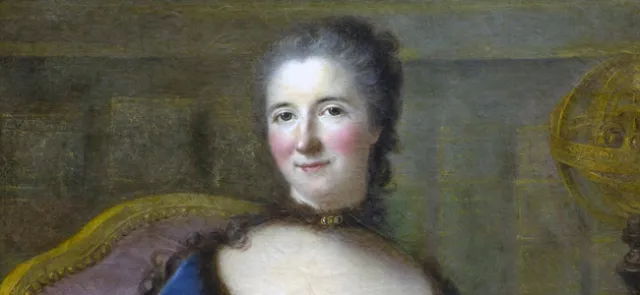 N°97Feb 11, 2026
Émilie du Châtelet: love and science
Some women mathematicians benefited from their husbands; others would have been better off without them. While translating Newton, Émilie du Châtelet fell in love. Mistreated by her lover, she became pregnant by him and died in childbirth before completing her work.
Read → N°97Feb 11, 2026
Ancient dynamics: Hypatia and the others
The names of four women associated with mathematics in antiquity are often cited: Theano, Aglaonice, Ban Zhao and Hypatia. But what do historical records tell us about them? And what can we learn about the social dynamics of the relationship between women and mathematics?
Read →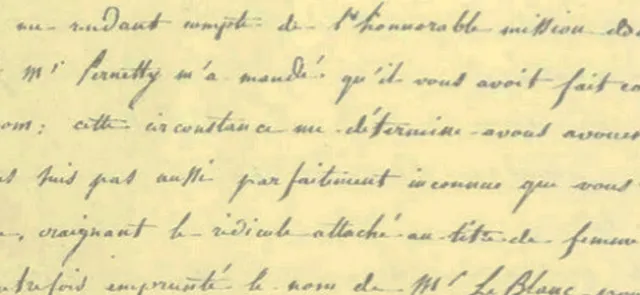 N°97Feb 11, 2026
Sophie Germain and her alter ego
The use of a male pseudonym became common from the Revolution onward. It was the strategy adopted by Sophie Germain, whose 250th anniversary we celebrate this year. Her correspondence with Gauss, in which she eventually revealed her identity, shows that this only heightened the admiration she inspired.
Read → N°97Feb 10, 2026
Recognition for women scientists of the Enlightenment
Contrary to what we might imagine today, a number of women scientists were paid for their work, and some were even honored with positions as corresponding or full members of learned academies. The scientific community knew what it owed them, and their varied career paths can be traced.
Read → N°97Feb 10, 2026
Categorizing eighteenth-century women of science
Identifying and classifying the diverse activities pursued by women versed in science gives us a better understanding of their roles. Several types of women scholars emerge: natural philosophers (in Newton's sense), technicians, scientific managers, students, translators, salon hostesses, and others.
Read → N°97Feb 10, 2026
At least two women scholars in Islamic lands
The Middle Ages left us few female mathematicians—at least, few whose names we know. In Islamic lands, at least two names have survived: al-΄Ijlīyah and Lubna of Córdoba.
Read →