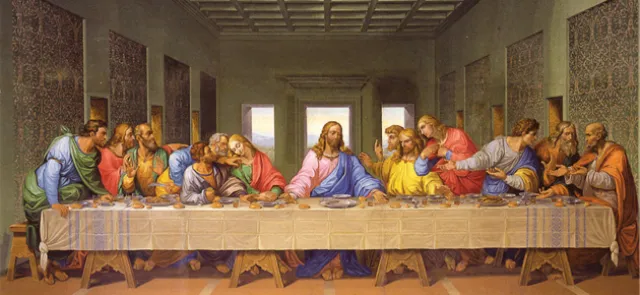
For the French, Leonardo da Vinci means the Mona Lisa in the Louvre and the spectacular inventions displayed at Clos Lucé in Amboise (Indre-et-Loire). Yet to understand this man of genius fully, we must follow in his footsteps through his native Italy.
-
Renaissance man
-------------------------
Leonardo was very much a product of the early Italian Renaissance. He was born on April 15, 1452, in a small Tuscan town nestled on the slopes of Montalbano, west of Florence. He was the illegitimate child of a notary and a peasant woman. Intending to become a painter, he entered Florence's most celebrated workshop, that of Verrocchio, sculptor to Lorenzo de' Medici, known as Lorenzo the Magnificent. Leonardo was already an accomplished artist when he left his master in 1478. He cultivated the effects of chiaroscuro ("light and shade") and sfumato ("smoky"), which soften outlines and lend great delicacy to his paintings. To achieve these effects, he studied various aspects of lighting with a scientist's eye, particularly the gradual transition from shadow to light.
Leonardo settled in Milan in 1481, in the service of the Sforzas, the family ruling the great Lombard city. His talent flourished: while continuing to paint and sculpt, he also began staging spectacles. Above all, he became an engineer and sought ways to improve various devices, including clocks and looms. This led him to mathematics, in which he found explanations for many mechanisms. These new roles raised his social standing. At the time, producing paintings, however fine, was regarded as ordinary craftsmanship, far beneath the status of an engineer…