On 28 October 1878, the Republican deputy Camille Sée introduced his bill to establish secondary education for girls. In it, he described the unjust state of affairs: "Among wealthy young women, it has become customary to sit the examination for primary-school teachers. They have their teaching certificate, just as their brothers have their baccalauréat; and some, driven by competitive spirit, even take and pass the baccalauréat examination." Sée's proposal quickly came to be seen as a step forward towards universal education. Yet in its details, it advocated different curricula for men and women and contained several statements that are highly questionable today, such as: "The aim is neither to divert women from their true vocation, which is to raise their children and run their households, nor to turn them into scholars, bluestockings or pedants."
These concessions to conservatives (see box) undoubtedly helped the bill become law on 21 December 1880 under the joint authority of the President of the Republic, Jules Grévy, and the President of the Council and Minister of Public Education, Jules Ferry. The Sée Law finally established secondary schools for girls, raising hopes that their future pupils would be able to take the baccalauréat and attend university without having to beg for special permission to study, as Julie-Victoire Daubié had done when she became the first woman to earn the baccalauréat in 1861, at the decidedly unusual age of 37.
Recruiting women teachers
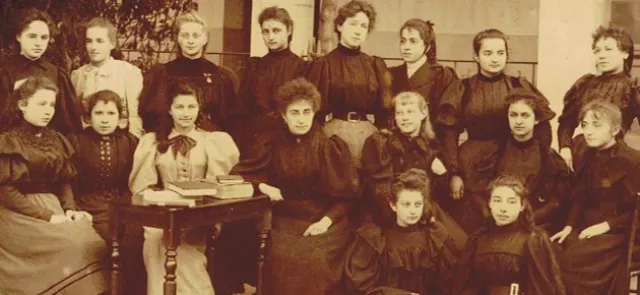
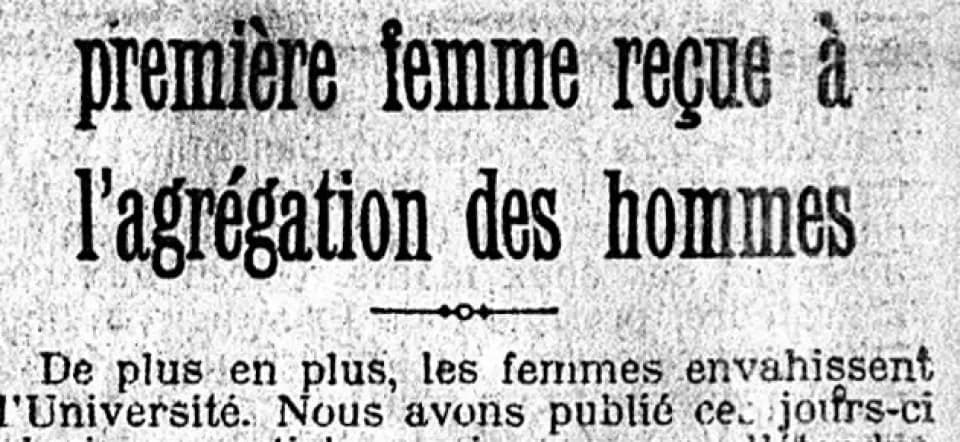
To support this reform and provide a corps of women teachers, the École normale de Sèvres was founded in 1880, followed three years later by the women's agrégation examinations. At this point, two recruitment examinations therefore existed side by side: the women's agrégation, reserved for women, and the examination that had existed since the beginning of the century, sometimes improperly called the "men's" agrégation even though it was not legally restricted to men. In a final injustice, the two examinations did not lead to the same professional status or pay scale.