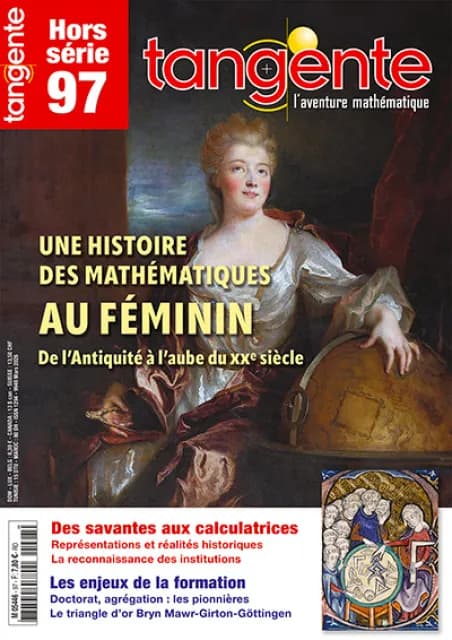
History of women's mathematics
All folders in this issue
From women scholars to calculators
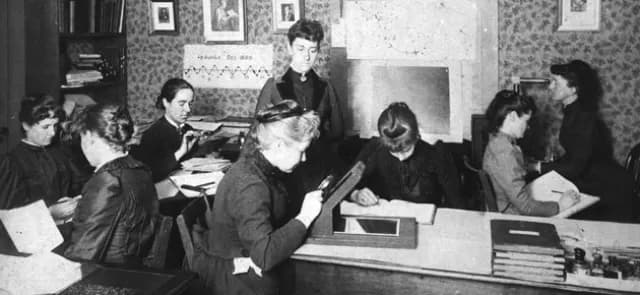
Being a mathematician, professionally or out of passion, encompasses many strategies, diverse paths, with sometimes a little recognition from institutions and the scholarly world, but often in obscurity where it is interesting to delve in order to understand what the different facets of the practice of mathematics by women were. Facing a science in the hands of men, some women thus responded to the spaces left to them in mathematics. Others wanted to conquer them in an even more assertive way. But the idea of the "learned woman" is a pitfall to avoid because society mocks this figure that has no place to be.

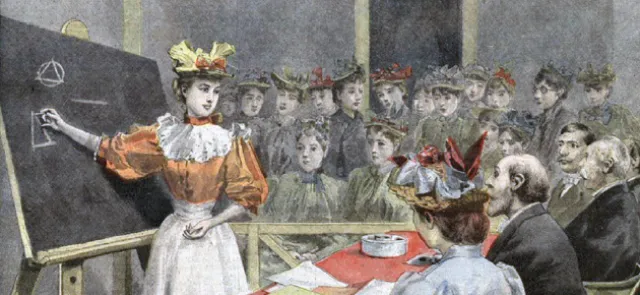
Women's education
In the 19th century, in France, school gradually took on the role we know today and, thanks to various feminist movements, people came to believe that it would be useful for girls to attend as well to learn to think for themselves too. From then on, there was a need for mathematics teachers and a women's aggregation in mathematics was created. In parallel, opportunities opened up in England, the United States and Germany. Across the Atlantic, Bryn Mawr University, reserved for women, became a highly dynamic center that trained generations of female mathematicians. In Germany, the University of Göttingen welcomed an increasing number of young female researchers.
Living as a mathematician
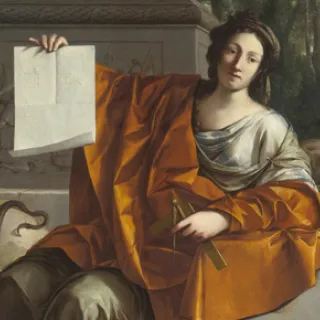
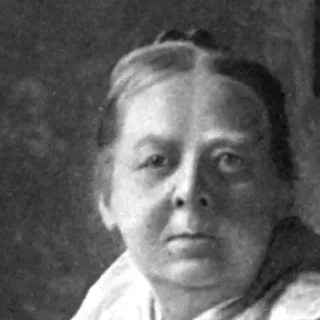
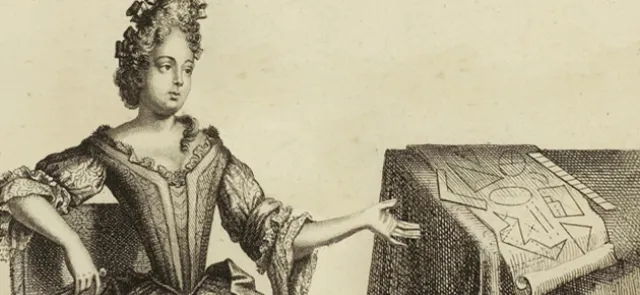
Hypatia leaves her name to no text even though she is certainly the author of many passages in scholarly works. Émilie du Châtelet is a woman who wants to live fully without having to choose between love and science. Mary Somerville experiences a first marriage to a man who has no esteem for the intellectual abilities of her sex. Sofia Kovalevskaïa dreams only of poetry. By diving into the intimacy of the multifaceted life of female mathematicians, we perceive the countless ways in which they integrate mathematics into it.