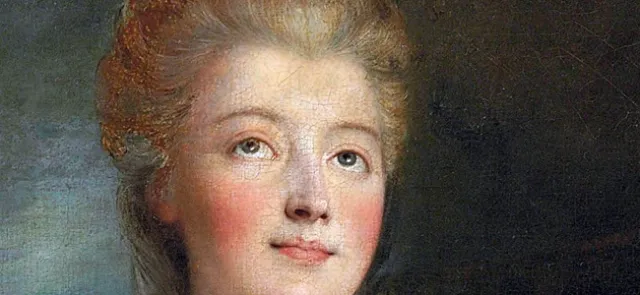
The first woman in the modern era to earn a doctorate in mathematics, Sofia Kovalevskaya challenged the academic and social boundaries of her time. Her foundational research on partial differential equations left its mark on the history of analysis and was immortalized in the celebrated Cauchy–Kovalevskaya theorem. She was the subject of a feature in issue 109 of Tangente. In this issue, you can read extracts from her personal writings and letters (see the article "Sofia Kovalevskaïa, de la poésie aux mathématiques").
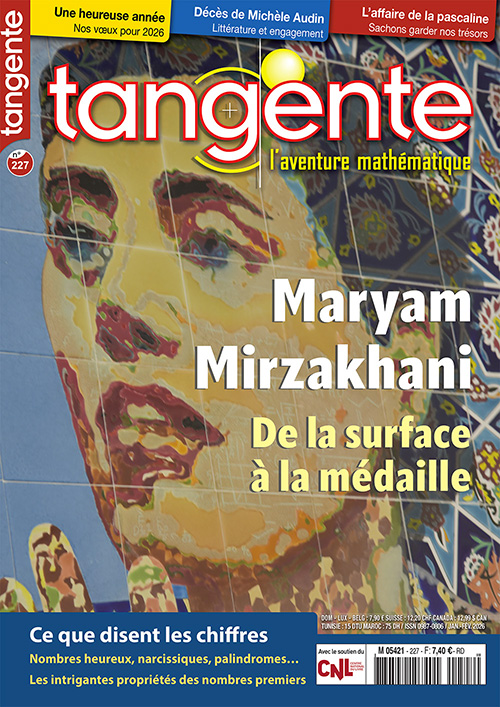
Various features and articles have been devoted to women mathematicians, including a feature on Maryam Mirzakhani in Tangente 227, as well as numerous articles on Maria Gaetana Agnesi, Sophie Germain, Mary Somerville, Emmy Noether, Florence Nightingale and Yvonne Choquet-Bruhat, to name just a few of the best known.
[
](https://www.tangente-mag.com/dossier.php?id=634)
Tangente also reflects current concerns about the state of mathematics education for girls and the place of women in mathematics by reporting on and analyzing reports published on these subjects (see the article from Tangente 205 here).