



From women scholars to calculators
Being a mathematician, professionally or out of passion, encompasses many strategies, diverse paths, with sometimes a little recognition from institutions and the scholarly world, but often in obscurity where it is interesting to delve in order to understand what the different facets of the practice of mathematics by women were. Facing a science in the hands of men, some women thus responded to the spaces left to them in mathematics. Others wanted to conquer them in an even more assertive way. But the idea of the "learned woman" is a pitfall to avoid because society mocks this figure that has no place to be.
All articles in this folder
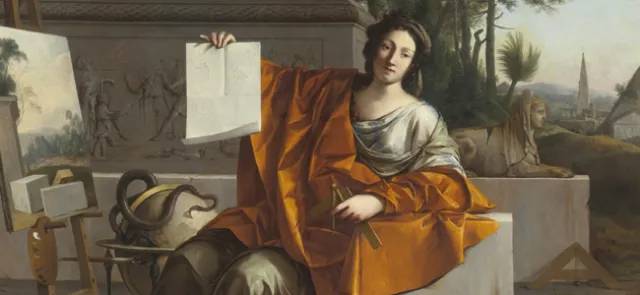 Podcast
Women mathematicians: a long-ignored history
This article explores the place of women in mathematics across the centuries, from the ancient world to the present day, and sheds light on those who have for too long been forgotten.

Sofia Kovalevskaya and many others
Although Tangente is bringing you a special issue devoted entirely to women mathematicians, this is not the first time we have invited you to learn more about them.
 Podcast
1897: Felix Klein's manifesto
In 1897, Felix Klein signed a feminist manifesto that, sadly, remains useful reading today for anyone who sees mathematics as an inherently male discipline.
 Podcast
Where are the women in the history of mathematics?
The history of mathematics has been written almost exclusively by men. Yet many women mathematicians have existed: not only the great names, but also many names erased by history. Grace Chisholm, for example, is a striking case of what is known as the Matilda effect.
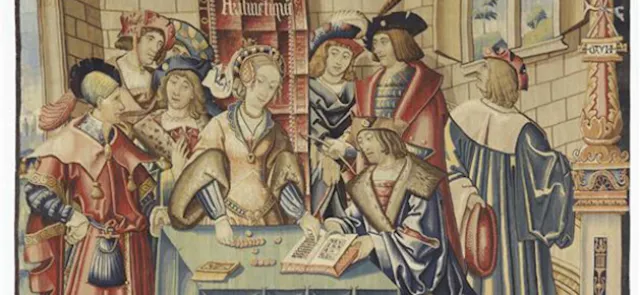 Podcast
The Middle Ages, between representations and reality
While the allegorical representation of mathematics is always done through female figures, medieval reality allowed only a very few women to engage in it: a handful of nuns and high-ranking women, such as a Florentine widow who took over her husband's abacus school in 1330.
 Podcast
At least two women scholars in Islamic lands
The Middle Ages left us few female mathematicians—at least, few whose names we know. In Islamic lands, at least two names have survived: al-΄Ijlīyah and Lubna of Córdoba.
 Podcast
Categorizing eighteenth-century women of science
Identifying and classifying the diverse activities pursued by women versed in science gives us a better understanding of their roles. Several types of women scholars emerge: natural philosophers (in Newton's sense), technicians, scientific managers, students, translators, salon hostesses, and others.
 Podcast
Recognition for women scientists of the Enlightenment
Contrary to what we might imagine today, a number of women scientists were paid for their work, and some were even honored with positions as corresponding or full members of learned academies. The scientific community knew what it owed them, and their varied career paths can be traced.
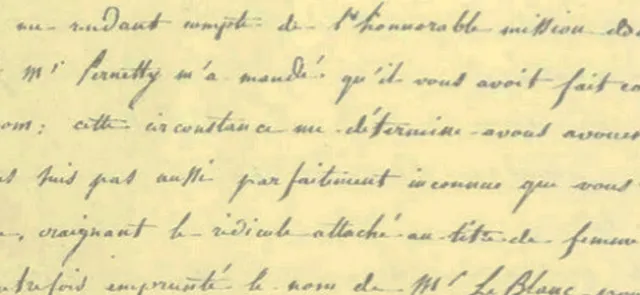 Podcast
Sophie Germain and her alter ego
The use of a male pseudonym became common from the Revolution onward. It was the strategy adopted by Sophie Germain, whose 250th anniversary we celebrate this year. Her correspondence with Gauss, in which she eventually revealed her identity, shows that this only heightened the admiration she inspired.
 Podcast
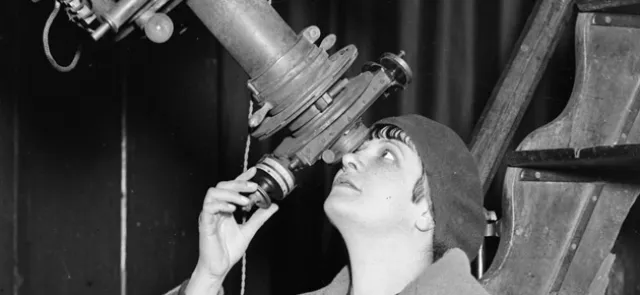
Women enter the Paris Observatory
Women began entering French astronomy in large numbers as computers in the 1880s. But it was not until 1908, when the standard career path for astronomers was reformed, that women began pursuing professional careers as astronomers, following in Edmée Chandon's footsteps.