The golden ratio in sangaku
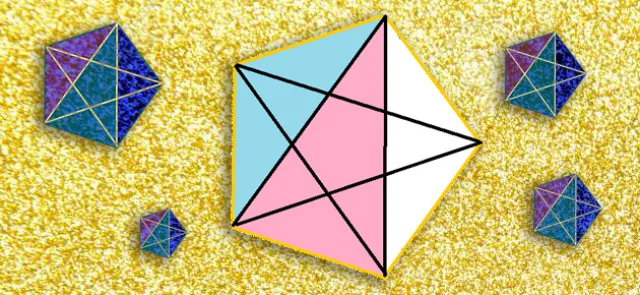
Though Western in origin, the golden ratio is said to be everywhere. So we went looking for it in sangaku… and struggled to find it, except in a few rare figures. But perhaps we simply overlooked it!


Though Western in origin, the golden ratio is said to be everywhere. So we went looking for it in sangaku… and struggled to find it, except in a few rare figures. But perhaps we simply overlooked it!


Articles recommended for you.

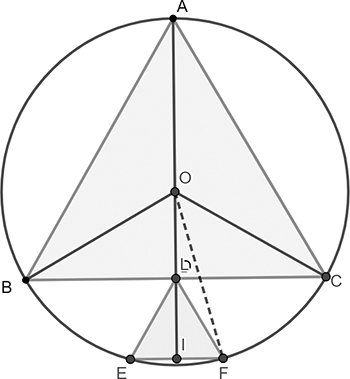
A sangaku was originally a Japanese wooden votive tablet. It sometimes bears an engraved geometric figure with the statement of a problem, together with the solution or sometimes a hint.

With the country cut off almost entirely from the world during the Edo period, Japanese mathematics developed in isolation for more than a century and a half. It was during this period that highly distinctive geometric puzzles flourished and prospered.

Proportionality often brings to mind the rule of three—in other words, a method of calculation. Yet the concept first emerged in geometry, through the study of similar figures, a cornerstone of many theorems that gave rise to the idea of incommensurable quantities.

The word "inequalities" often brings arithmetic or algebra to mind. But inequalities also have their place in geometry! The most famous of them, the celebrated triangle inequality, still has more than one trick up its sleeve.
Discussion
Sign in to post a comment and talk with other readers.
No comments yet. Be the first to respond.