The very social Bechembach paradox
-------------------------------------
Some qualities are barely conceivable: can one be extraordinarily ordinary, like Mr Jourdain, or stand out as the most average of one's fellow citizens? Being as average as possible is not so simple, still less being the most ordinary. This social approach gives us a version of the Bechembach paradox: let's partition the set of all people, living or dead, into two subsets, placing all remarkable individuals in the first and all those who are not remarkable in the second. Somewhere in the second set is the "least remarkable" person—and that very characteristic makes this person highly interesting. We must therefore transfer this individual to the VIP set and remove them from the plebeian set… which, by repeatedly applying the same reasoning, may eventually lose every one of its elements! There are therefore no common people: the beneficial effects of paradoxical thinking put a definitive end to the class struggle!
-
Shannon: a paradox that short-circuits the rules
---------------------------------------------------
The Bechembach paradox also applies to mathematics, where it shows that the quest for all "remarkable" numbers would be an unattainable Grail, as we have seen elsewhere in this issue. Paradoxes of this kind arise when the absence of a criterion—remarkableness—is used to characterize its presence.
In the same vein—the function lies in the absence of a function—the Shannon paradox considers a circuit in which switching it on causes it to switch off (when the converse is also true, the circuit oscillates, as in electric bells). This "switching logic" gives rise to paradoxes such as "I have only one rule: to have no rules". Thus, for Bernard Shaw, "The golden rule is that there are no golden rules".
-
One swan is all it takes
----------------------
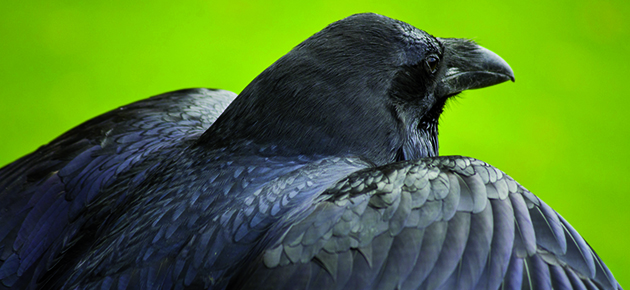
From the observation that all known swans are white, we cannot conclude with absolute certainty—but can only presume—that all swans are white. This limitation led Carl Hempel to formulate his famous "paradox of confirmation": since the statement "all ravens are black" is logically equivalent to its contrapositive ("anything that is not black cannot be a raven"), Hempel explains, the only way to determine whether all ravens really are black would therefore be to catalogue every non-black object and check that none of them is ever a raven. Noticing that your mother-in-law's hat is orange lends support to the claim that all ravens are black! This is the Hempel paradox.
This approach to ornithology is strange: observing a red cow would equally support the claims that all ravens are black and that a false statement—"all ravens are white", for example—is true…
=
-
Beware of logic!
---------------------------
We might question the Englishman's statistical reasoning: on landing at Calais, he spots first one, then two or three red-haired Frenchwomen and exclaims: "Oh dear! All the women on the Continent have red hair, don't they?" Yet this kind of confirmation is the physicist's daily bread: after performing the same experiment successfully a hundred times, the physicist expects to succeed on the hundred and first. Logically, there can be no certainty…
Nevertheless, Francine Jaulin-Mannoni notes, it is sometimes prudent to rely on such rough reasoning: we observe that one mushroom is deadly, as is another of the same species, and then yet another. From these finite observations, we draw the "obvious" conclusion that this species of mushroom is deadly. Even Carl Hempel would not have risked disputing the dangerous nature of all death caps (anything that is not deadly is not a death cap).
Certainly, logic teaches us to be wary of certainty: "We can be certain of nothing, not even that we can be certain of nothing" (Samuel Butler).