




Sets
This issue is not fully translated into English yet; only translated content is shown.
Read the French versionAll folders in this issue

Sets, relations and functions: a new approach
A set is a collection of objects – the elements – between which there can exist all kinds of relations. At the elementary level, we can visualize sets using 'potatoids' connected by arrows to represent the relations that link them, but this naive representation quickly reaches its limits, in particular when the sets are infinite. Set theory mainly provides a framework for the rigorous formalization of all areas of mathematics and leads to mind-blowing proofs: more than a simple theory, it is a new approach to mathematics.


Numbers, operations, structures
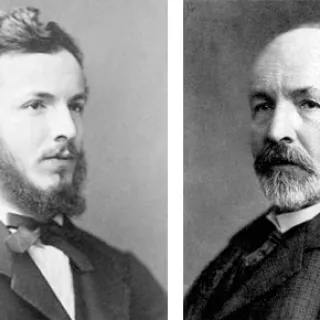
Numbers are at the center of the mathematical edifice. After a long period where they were apprehended through intuition, the need arose to conceive them with the help of a rigorous axiomatic system; the one introduced by Peano for natural numbers is the finest example. Set theory subsequently led to the construction of rationals, reals, and complex numbers. Drawing inspiration from these methods and generalizing them, it enabled the definition of more general structures like the notion of group and to provide a rigorous foundation for geometry within the framework of vector space theory.


Infinity, axiomatic and paradoxes
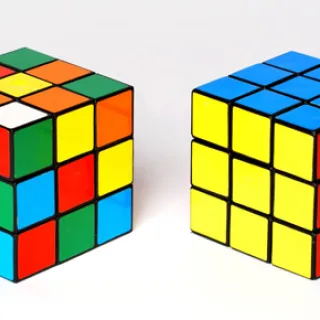
As simple and fruitful as it may be, the notion of set reveals, once subjected to the merciless analysis of the logician, formidable technical problems. Paradoxes emerge: can we consider the set of all sets? Can a set be an element of itself? Infinite sets raise other questions. How many fundamentally different types of infinity exist? Infinity, self-reference, the paradoxes, lying in ambush, hold quite a few surprises for the imprudent traveler…

All articles in this issue

Lewis Carroll: toward modern logic
The marvelous storyteller behind Alice's Adventures in Wonderland was also a photographer, a mathematics teacher at the University of Oxford and… an inspired logician.

The paradoxes of infinity
Infinity must be handled with care, lest we lose ourselves (in its paradoxes)...

An unsettling approach to mathematics
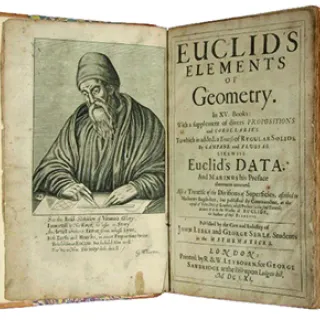
Set theory, iconoclastic in Cantor's day, has become universal. Nothing like it had been seen since Euclid: it provides a foundation for mathematics! That foundation seemed solid—until paradoxes emerged. So what is this highly controversial mathematical construction?

The language of sets
Words and symbols are also crucial to set theory...

The New Math controversy
By the late 1960s, reform of the mathematics curriculum had become essential. The reform proposed by the Lichnerowicz Commission took the conceptual approach too far, at the expense of intuition.

Set and Dobble: two smash-hit games
Here are two well-known games whose structure is based on set theory
Those pesky paradoxes! (3)
Logic may sometimes try to deceive us—beware!
Those darn paradoxes! (4)
Every claim must be proved properly.