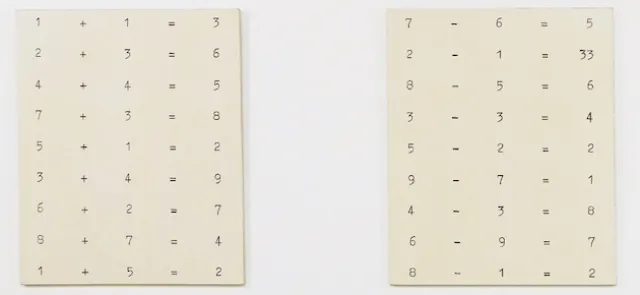
-
A little etymology
------------------------
"Ensemble" was originally an adverb derived, around 1050, from the Latin insimul, meaning "at once" or "at the same time." It was also used to mean "simultaneously" and in expressions that have since become archaic, such as tout ensemble ("at once").
The masculine noun "ensemble" arose by turning the adverb into a noun; it is first attested in tout-ensemble (1664), an artistic term for the unity a work derives from the well-balanced proportions of its elements. This meaning was later expressed by un ensemble. This gave rise to the now archaic expression être d'ensemble, meaning "to be harmonious." By extension (1694), the noun came to denote all the elements of a whole, hence d'ensemble ("general"), dans l'ensemble (an adverbial phrase used to qualify an assessment), and dans son ensemble ("in its entirety"). Since the 18th century, ensemble has also referred to the unity produced by synchronized movements and cooperation among the various elements, initially in reference to a body of troops (1755). Ensemble subsequently came to denote people or things brought together into a whole considered in its own right: an "ensemble of facts," a "vocal ensemble," or the "entire staff."
In the 20th century, ensemble acquired several specific meanings: a "housing development" (1907), a "school complex" (1968), furniture in a single style (1920), and matching items of clothing designed to be worn... together (1924).
-
The first symbols of set theory
-------------------------------------------------
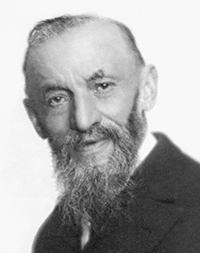

Georg Cantor may have founded set theory in the 1870s, but Giuseppe Peano's fundamental contribution must not be overlooked. From an early age, this Italian mathematician, born in 1858, displayed great originality and a remarkable ability to synthesize the theories then taking shape. He produced some surprising counterexamples, such as a curve that fills a square. Although a poor teacher, he worked tirelessly to simplify mathematical language and make it more accessible.
Keen to popularize set theory and make it clearer and easier to use, Giuseppe Peano introduced numerous symbols, including the inclusion symbol (and its inverse ). To denote membership, he chose the initial letter of the Greek verb form estinn, meaning "it is": the letter . Bertrand Russell later proposed stylizing as to distinguish it from its use in analysis.
Peano also introduced the existential quantifier , using a mirror-image "E" as the initial of esiste, Italian for "there exists." The symbol was introduced by the German logician Gerhard Gentzen in 1935: drawing on Peano's idea, he inverted the initial letter of the German All Zeichen, meaning "every sign" or "every character."
-
In mathematics: recent terminology
---------------------------------
In mathematics, ensemble appeared in 1890 as a translation of the German Menge (1883), meaning a collection of elements whose membership criterion is unambiguous and which may possess certain properties. This usage gave rise to a number of terms: "set theory," "finite set," "countable set"... In the mid-20th century, the word sous-ensemble and the adjective ensembliste appeared, the latter being used mainly to describe certain kinds of mathematics.