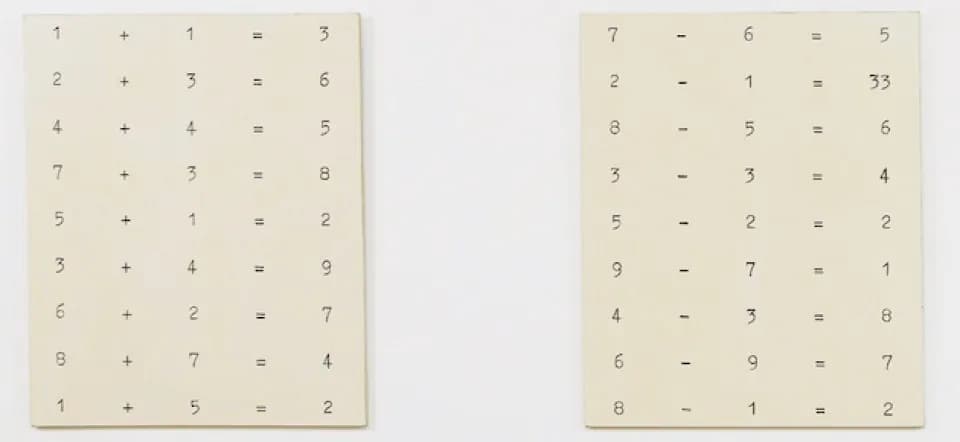
Artists’ perspectives on "sticks, digits and letters" (as Raymond Queneau put it), as well as on numbers, basic geometric shapes, equations and the mathematical universe in general, have undoubtedly brought greater knowledge and "beauty" into the world. Digits and numbers, symbols of modernity, began to invade canvases in the early 20th century—first those of the Futurists. The manifesto of this artistic movement, published in 1914 by the Italian writer Filippo Tommaso Marinetti (1876–1944), was entitled La Splendeur géométrique et mécanique et la sensibilité numérique.
A wealth of forms
----------------------
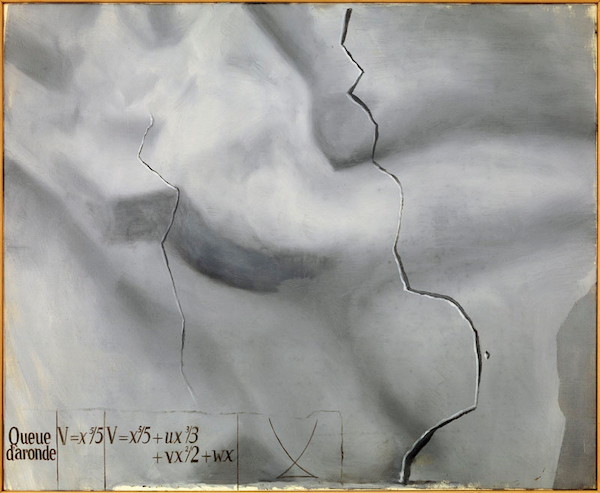
Salvador Dalí’s (1904–1989) later years were marked by an artistic output devoted entirely to René Thom’s (1923–2002) catastrophe theory. The name delighted the Catalan artist; in Paris in 1979, he called it "the most beautiful and aesthetically pleasing theory in the world."