



DANIEL JUSTENS
90 articles published in Tangente
 KnowledgeN°77Feb 18, 2021
Different color systems
We live surrounded by color images. But what exactly are these colors? How are they defined, broken down, or reconstructed? Different representations are used in different contexts, the best known being RGB and CMYK.
Read → N°77Feb 18, 2021
Draw me a picture!
"What is an image?" The answer to this seemingly straightforward question is far from obvious.
Read → KnowledgeN°198Feb 02, 2021
Stochastic processes:
How can we model a phenomenon that evolves randomly over time? To tackle this question, it was first necessary to ask what randomness is, formalize it, and incorporate it into mathematical models. That is what stochastic processes seek to do.
Read → Math for everyoneN°76Nov 03, 2020
A powerful tool for reasoning
By drawing infinitely many conclusions from a single principle, proof by induction is one of mathematics’ great achievements. Constructing recursively defined sequences makes it possible to model objects of practical interest and solve a wide variety of problems.
Read →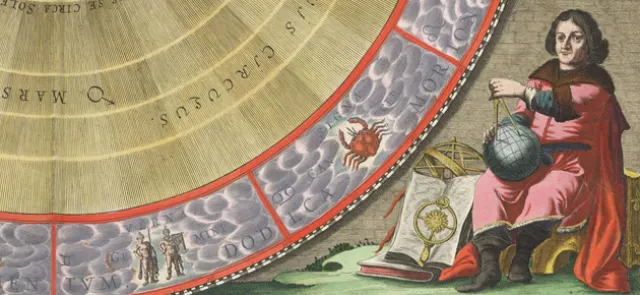 Math for everyoneN°195Jul 14, 2020
The delicate business of using models
When direct measurements are impossible, we must rely on mathematical models, which need to be validated. The results then depend on the precision of the available direct measurements and on how well suited the chosen model is.
Read → History and CultureN°194May 20, 2020
Ishango bones finally deciphered?
The earliest mathematical object is more than twenty thousand years old. It was discovered by chance in the heart of Africa by a Belgian geologist. Its interpretation remains a matter of debate to this day.
Read → History and CultureN°194May 20, 2020
Mind-boggling surreal numbers!
By combining Dedekind cuts with von Neumann's construction of the natural numbers, John Conway constructed the largest possible collection of numbers: the class of surreal numbers, which he endowed with the structure of a field.
Read →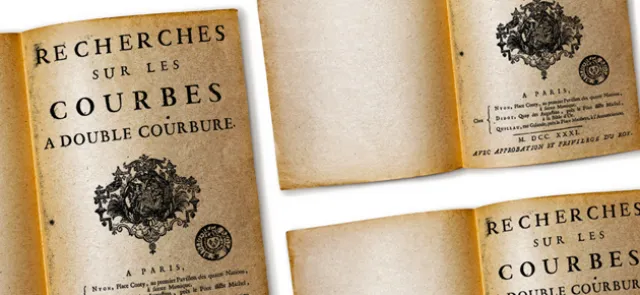 Math for everyoneN°74Apr 15, 2020
Curves that leave the plane
Not all curves in space are confined to a plane. To study these "space curves," several new concepts—curvature and torsion—are introduced using a carefully chosen frame of reference. Get to grips with them and learn how to use them!
Read →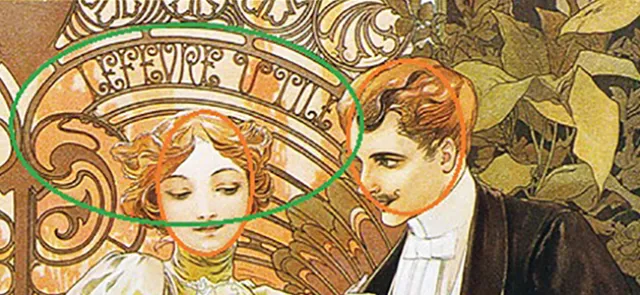 Math for everyoneN°74Apr 15, 2020
Art Nouveau: a movement of curves
Art Nouveau was a total art movement that flourished across several European countries in the late 19th century. Never before had an artistic movement placed such emphasis on the beauty and variety of curves.
Read → Math for everyoneN°72Oct 10, 2019
Simulated annealing
During an approximate computation, how can we distinguish a local minimum from a global one? Simulated annealing, based on a common practice in metallurgy, offers a subtle yet effective heuristic method for many applications.
Read → Math for everyoneN°72Oct 09, 2019
Optimizing welfare?
Is the welfare of a population simply the sum of its members' satisfaction scores? This is far from certain, especially since measuring, comparing and aggregating individual utilities is no straightforward matter. Italian economist Vilfredo Pareto proposed a novel approach.
Read → Math for everyoneN°72Oct 09, 2019
The Monte Carlo method
In practice, finding an optimal value often involves computing demanding integrals. How can this be done? Physicists developed the Monte Carlo method, whose complexity does not increase with the dimension of the integrals involved.
Read →