



DANIEL JUSTENS
90 articles published in Tangente
 History and CultureN°203Dec 21, 2021
Solving Molière's equations
While we wait for the "Maths and theatre" feature in our next issue, here is a short sketch that solves some equations posed by Molière, with incomplete information but under constraints. A teacher (of maths?) and an actor meet by chance...
Read →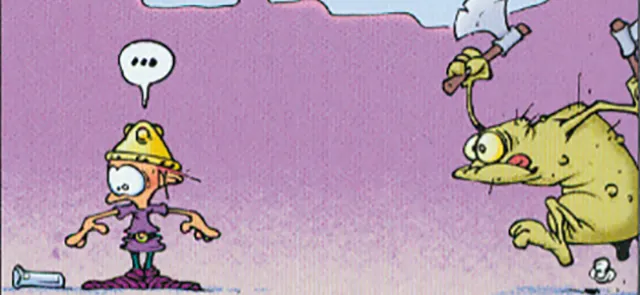 History and CultureN°203Dec 18, 2021
Midam’s mathematical models
Welcome to the world of Michel Ledent, better known as Midam. For thirty years, his characters have appeared in two comic-book series, each carving out a distinctive place of its own. Let's explore the mathematics hidden behind their hilarious adventures.
Read → Math for everyoneN°203Dec 17, 2021
Not so magical after all...
The myth that the golden ratio is found in nature is remarkably persistent.
Read → History and CultureN°79Aug 23, 2021
The founder of free inquiry
"Freedom is to science what air is to an animal; deprived of freedom, science dies of asphyxiation, like a bird deprived of oxygen."
Read → Math for everyoneN°201Aug 20, 2021
Weighted systems in astronomy
Planetary systems are represented mathematically using barycenters.
Read → History and CultureN°199Apr 14, 2021
Benefits and drawbacks of digital technology in music
The introduction of digital technology into the arts was a genuine revolution. In music, that revolution took many forms.
Read → N°77Feb 18, 2021
Could Georges Méliès have discovered 3D cinema?
French illusionist and filmmaker Georges Méliès (1861–1938) is well known for his fantastical, poetic films, which are often seen as dated today.
Read → N°77Feb 18, 2021
Holograms: genuine three-dimensional images?
Envisaged as early as 1892 by Jules Verne in his Gothic novel Château des Carpathes, holograms—three-dimensional images—were not actually theorized until more than half a century later by the Hungarian-British engineer Dennis Gabor (1900–1979), winner of the 1971 Nobel Prize in Physics.
Read → N°77Feb 18, 2021
3D television: the TV of tomorrow?
How can the flat screens in our offices and living spaces create the illusion of everyday depth? By showing each eye a slightly different image, they can prompt the brain to create a three-dimensional representation.
Read → N°77Feb 18, 2021
Steganography
For millennia, the most extraordinary tricks have been used to transmit hidden messages.
Read → N°77Feb 18, 2021
The expanding uses of photogrammetry
Photogrammetry encompasses all the techniques that use parallax to produce digital three-dimensional models of objects from images taken from different viewpoints.
Read → N°77Feb 18, 2021
The color of quarks
Matter is discrete: it consists of molecules, themselves made up of atoms, each containing a nucleus of positrons and neutrons surrounded by a cloud of electrons. All are regarded as "elementary particles"… yet there are dozens of them! How can such diversity be explained at the very foundations of matter?
Read →