



Curiosity
Patterns, crafts, magic squares and fun mathematical content not part of the school curriculum
OuLiPo: Mathematics inspires literature | Tangente
On November 24, 1960, Raymond Queneau, a writer with a passion for mathematics, and François Le Lionnais, a mathematician with a love of literature, founded Oulipo (the Workshop of Potential Literature), together with mathematicians such as Paul Braffort and Claude Berge, as well as Jacques Bens, Jean Lescure and Marcel Duchamp. They would later be joined by Georges Perec, Luc Étienne, Jacques Roubaud, Italo Calvino and others.
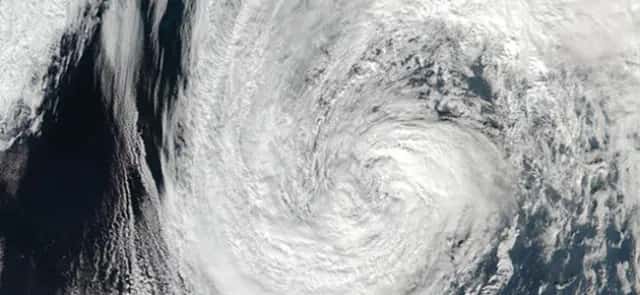
An illustrious line of descendants
It all began with a football to which Euler's formula was applied. Why does the constant 2 appear on the right-hand side? To find out, we follow in the footsteps of Henri Poincaré, André Weil and… Alexander Grothendieck.
From sentence to formula
Before the 20th century, everyday language played a prominent role in mathematical writing. Did that necessarily make it easier to read? How did the balance between descriptive sentences and concise formulas emerge?

A “little” theorem for major advances
Fermat's “little” theorem is surely one of the most fruitful results in arithmetic. Ever since it was first stated in 1640, mathematicians have made constant use of it. Euler even proposed a sweeping generalization. Let's take a closer look…
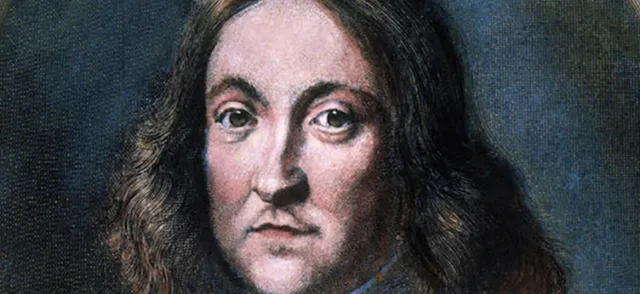
Fermat and his little theorem: history | Tangente
In the 17th century, Pierre de Fermat, though not a professional mathematician, was one of the pioneers of number theory. Less famous than his "last" theorem, whose proof has yielded more applications than the statement alone, his "little" theorem is immensely useful to us.
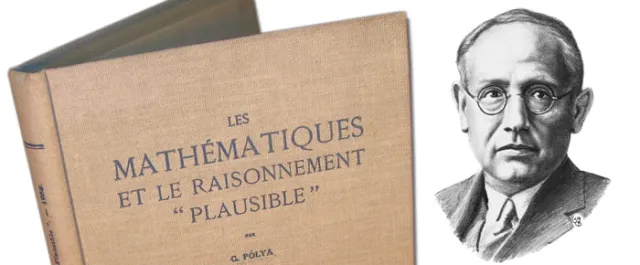
Psychological experiments in arithmetic
Like any other scientist, a mathematician makes use of experiments. But these do not necessarily resemble those conducted in other sciences: carried out mentally or on a sheet of paper, they are usually psychological in nature!
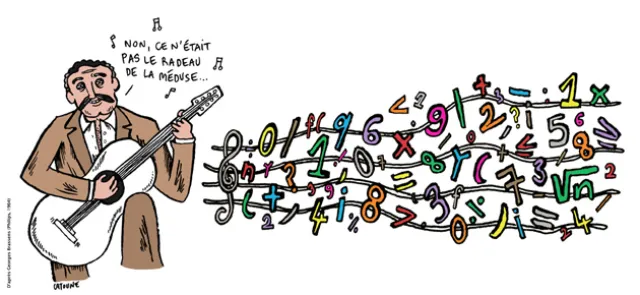
In search of friends
Integers never cease to fascinate us: divisibility raises some formidable questions, as several conjectures about perfect numbers attest. Here, experimenting with a computer is a valuable aid in the hunt for counterexamples.

A taste for maths... through reading!
Inspiring an interest in mathematics through popular science books lies at the heart of many recent initiatives. By a happy coincidence, in early 2017 the City of Paris libraries are launching an event with precisely this aim. Its title? "A taste for maths."
2016 Awards: the winners
The 2016 Tangente Awards were presented on November 28 at the Palais du Luxembourg. Here is our report on awards that are gaining ever greater prominence in France's scientific and cultural landscape.

Those darn paradoxes! (2) — Mathematical note | Tangente
God exists because mathematics is consistent, and the devil exists because we cannot prove it...

Holy paradoxes! (1): A mathematical brief | Tangente
Paradox is to logic what experiment is to the physicist: it allows us to adjust theory in response to the question posed by an alarming result. It is a springboard for the mind.
The rules of infinity
You cannot play with sets without abiding by certain rules...

Set and Dobble: two smash-hit games | Tangente
Here are two well-known games whose structure is based on set theory

The New Math controversy — A Tangente math brief
By the late 1960s, reform of the mathematics curriculum had become essential. The reform proposed by the Lichnerowicz Commission took the conceptual approach too far, at the expense of intuition.
The language of sets
Words and symbols are also crucial to set theory...
The Pythagorean circle
The radius of the circle inscribed in a right triangle whose three sides have integer lengths is itself an integer! This little arithmetical curiosity is very easy to prove.
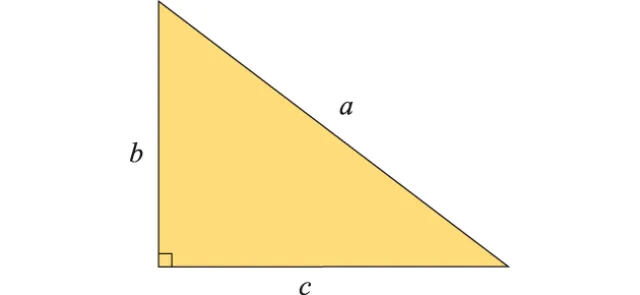
Pythagorean triples
In a right triangle, the square of the hypotenuse equals the sum of the squares of the two sides forming the right angle. When three integers satisfy this relation, they are called a Pythagorean triple. What are these numbers, and how can they be characterized?
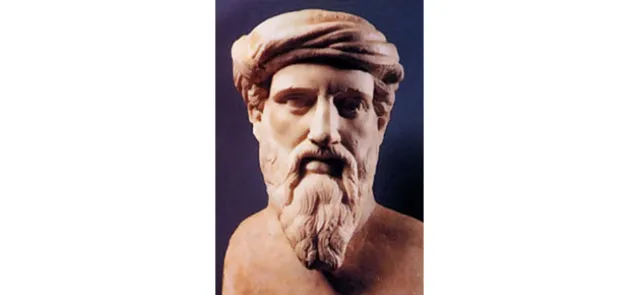
Pythagoras: much more than a theorem
Pythagoras is more than the name of a famous theorem: he inspired an entire philosophical tradition that would influence not only mathematics and astronomy but music itself. Beyond the sciences, history has not heard the last of the "long-haired Samian"!
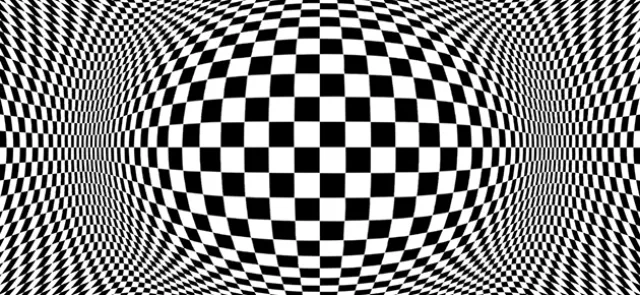
Illusory geometry: baffling squircles | Tangente
Spectacular optical illusions are taking the Internet by storm: two pieces that appear to be different sizes fit perfectly on top of each other; square shapes appear circular when reflected in a mirror; a chocolate bar loses its squares one by one without ever getting smaller... Here is the explanation behind some of these cognitive deceptions.
Between algebra and analysis: an indispensable world
Polynomials belong to both algebra and analysis, which can lead to all kinds of confusion! This dual nature offers a simple way to explain the subtle differences between variables, unknowns and indeterminates.