

Émilie du Châtelet, Scholar and Free Spirit
Too little known by scientists, reduced to a mere translator of Newton or a popularizer of German science philosophy, often even characterized solely as Voltaire's mistress, Émilie du Châtelet was in reality a very great scholar, both mathematician, physicist and philosopher. Her life as a woman of learning in a misogynistic century meant that she did not always benefit from great recognition despite her extensive work. She was nevertheless elected to the Academy of Bologna and her Institutions de Physique were required reading for many scientists, to the point of being regularly cited in the Encyclopédie. Now celebrating a woman who was both a great scientist and also a free and feminist woman!
All articles in this folder
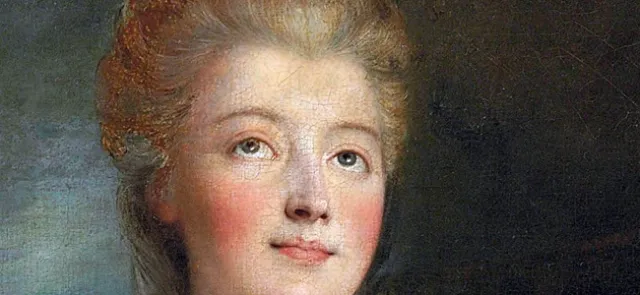
Émilie du Châtelet, learned philosopher | Tangente
Émilie du Châtelet is often presented as the translator of Newton and the woman who introduced Leibniz's and Wolff's thought to France. On that view, she would be no more than a translator and a popularizer. In reality, she is far more than that: she is above all a scholar and a philosopher.

Émilie du Châtelet: From shadow to light | Tangente
As a learned woman, Émilie du Châtelet sometimes found herself overshadowed by men, beginning with Voltaire. Yet her intellectual freedom allowed her to shine and win genuine recognition.
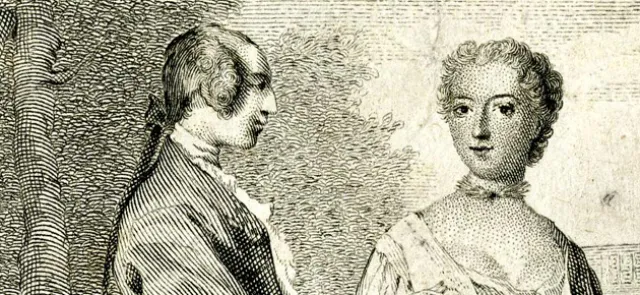
The marquise and the scholars of her time | Tangente
Among masters and peers alike, the marquise may have been unique for her sex, but she was not alone, as her many intellectual exchanges with the scholars of her time attest: Maupertuis, Clairaut, Euler, Kœnig, Johann II Bernoulli, Cramer, among many others.
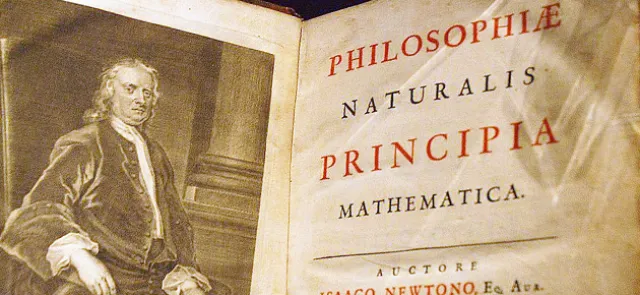
More than a translation of Newton | Tangente
Émilie du Châtelet is famous for having translated Isaac Newton's scientific work into French. Yet she did not simply reproduce the Latin text identically in French; she undertook an original rewriting of the proofs and concepts of Newtonian physics.