



Epidemiology
External transmission of microbes or viruses as well as internal propagation of malignant cells follows algorithms whose modeling is governed by a branch of mathematics: that of dynamic systems. Associated with probability theory, the models thus constructed make it possible not only to predict the evolution of diseases, but also to make decisions, both in terms of individual therapy choices and in terms of public policy, for example regarding isolation or vaccination.
All articles in this folder
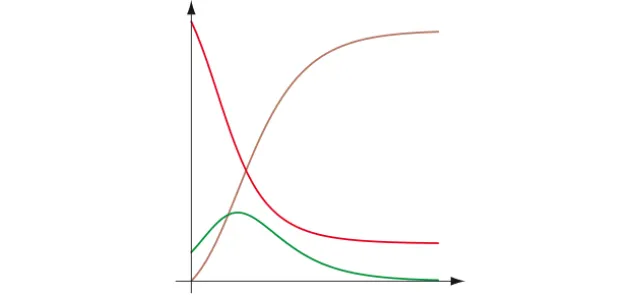
The spread of epidemics
When faced with what seems to be the start of an epidemic, how can we predict how it will develop and spread geographically? Mathematical models attempt to answer these questions.

Advances in medicine in the Arab-Muslim world
Three great thinkers of the Arab-Muslim world revolutionized medical knowledge and practice in the Middle Ages. Their teaching influenced the West for centuries.
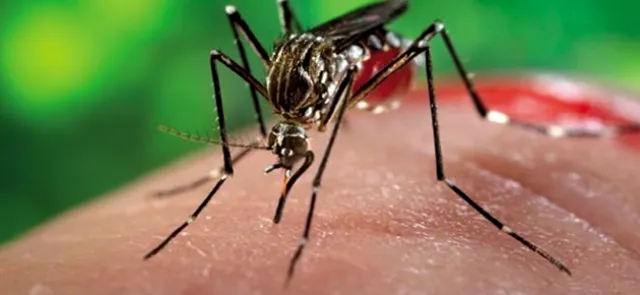
Ross's model: explaining the spread of malaria
Malaria remains a scourge that continues to ravage Africa today. Ronald Ross discovered its cause and developed a model of how the number of infected people changes. Will the arrival of chikungunya in our part of the world increase interest in his model?

A probabilistic model for cancer immunotherapy
How can the interaction between cancer cells and immune cells be modelled mathematically? The model presented here sheds light on the mechanisms that allow cancer cells to evade therapy and helps in developing more effective treatment protocols.

Markov: chains of hope
For a disease transmitted by insects, a treatment campaign may not necessarily prove effective in the long term, as a particular case study using the mathematical concept of a Markov chain will show.

They healed and cured through mathematics
Trained in mathematics, two trailblazing figures applied it to medical care. Giovanni Borelli developed a scientific approach to physiology, while Florence Nightingale modernized nursing care by drawing on new statistics.
Daniel Bernoulli and the mathematical modelling of smallpox
In the mid-18th century, it was discovered that inoculation with a small dose of smallpox could prevent the disease. But there was a risk of contracting it rather than becoming immune. Daniel Bernoulli devised the first mathematical model for comparing the risks of the two options: whether or not to accept inoculation.