Although their forecasts are inevitably imperfect, mathematical models of epidemics are designed to support public-health decision-making. More specifically, when a disease begins to exhibit an epidemic pattern, the models attempt to answer the following question as quickly as possible: are we witnessing the start of an epidemic? If so, how extensive will it be?
-
The SIR model
-------------
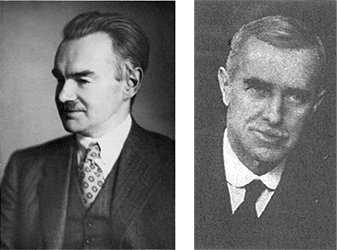
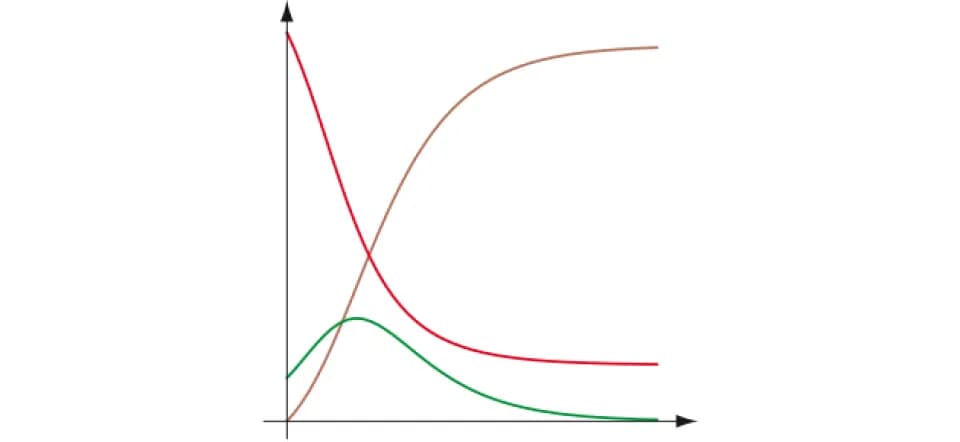
William Kermack and Anderson McKendrick proposed the first realistic model in 1927. Their model divides the population into three compartments: S, comprising individuals susceptible to the disease; I, comprising those who are infected with it (and contagious); and R, comprising those who have recovered or died. In either case, these individuals are immune and will no longer infect anyone. The SIR model implicitly assumes that the total population (P = S + I + R) does not increase, and tracks how these three compartments change over time as a function of two rates that can be measured experimentally.