



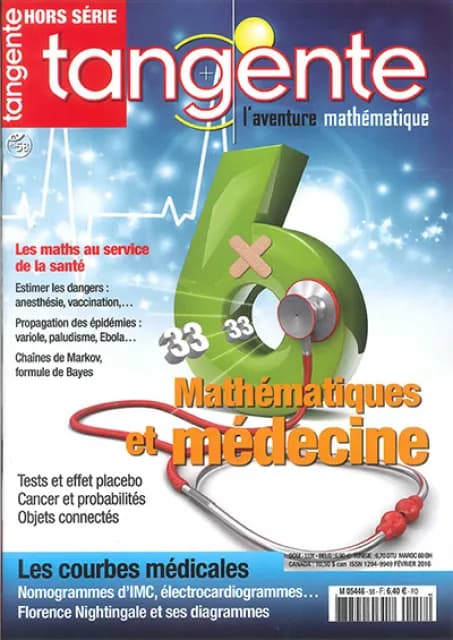
Maths and medicine
This issue is not fully translated into English yet; only translated content is shown.
Read the French versionAll folders in this issue

Statistics and medicine, a marriage of convenience
The art of healing is not an exact science: an identical treatment, curative or preventive, applied to several groups of sick or healthy individuals, often yields paradoxical results, given the astonishing variety of living things. Whether it is to compare the effects of different drugs or placebos, to determine an ideal body mass index or to quantify the reliability of a screening test, the use of statistical and probabilistic reasoning proves indispensable in medicine.


Epidemiology
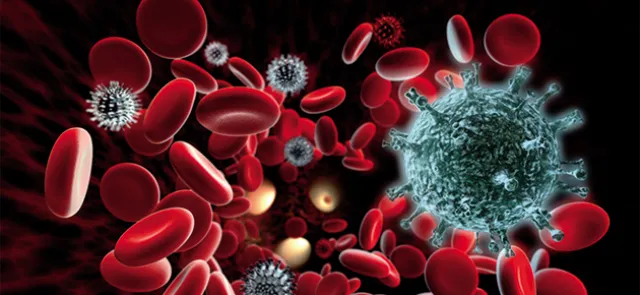
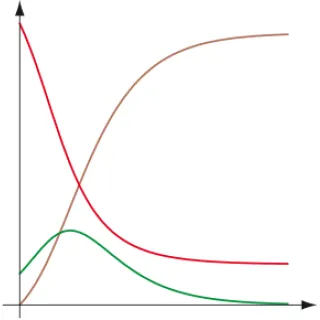
External transmission of microbes or viruses as well as internal propagation of malignant cells follows algorithms whose modeling is governed by a branch of mathematics: that of dynamic systems. Associated with probability theory, the models thus constructed make it possible not only to predict the evolution of diseases, but also to make decisions, both in terms of individual therapy choices and in terms of public policy, for example regarding isolation or vaccination.


Mathematics and medical techniques
Behind new medical techniques, mathematics hide more than ever. The development of imaging, whose most well-known tools are the scanner or the MRI, has revolutionized practices. Many branches of mathematics were called upon to develop these new technologies: geometry, Fourier analysis, the Radon transform and, more recently, wavelet theory. Furthermore, more and more individuals are testing, via their smartphone, various indicators such as their heart rate, their blood pressure or their weight. This may be useful, but not without risk…


All articles in this issue

The Birth of Rational Medicine
Among the theorists of medicine in Antiquity, the names of Hippocrates and Galen, the first to use rational methods for studying disease, have gone down in history. Before them, Pythagoras had laid the first foundations of Western medicine.

Diagnosis: Medical reasoning
Mathematical reasoning leads to certainties, provided it respects logic and the axioms, whereas even the most competent doctor can make a mistake in a diagnosis. How can we explain this difference?

Mathematics and medicine news
Mathematics in everyday medicine

Maths applied to medicine
Mathematics is essential to cutting-edge technology

Crossed etymologies
Most medical terms are of Greek origin, sometimes Latin. And while mathematics is sometimes reluctant to draw on ancient languages, certain fields have borrowed vocabulary from them. This explains why we find common roots in these two disciplines.

Tips for testing or estimating
How can we cut the cost of tests or estimate the size of groups of infected people without knowing which ones they are? Here are a few tricks!

Homeopathy: alternative medicine or pseudoscience?
The origin of the little granules