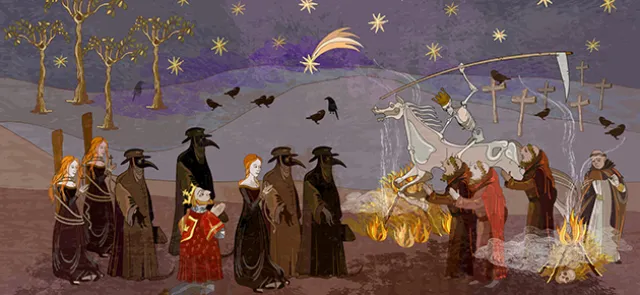
Malaria—sometimes called paludism in older English-language texts—has been known since antiquity and still kills hundreds of thousands of people every year, mainly in Africa. In 1880, Alphonse Laveran, a French military doctor, discovers the parasite responsible for the disease in the blood of patients in Algeria.
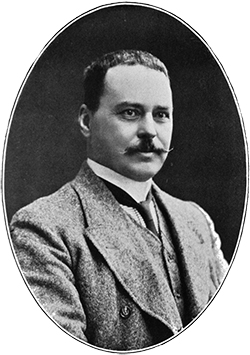
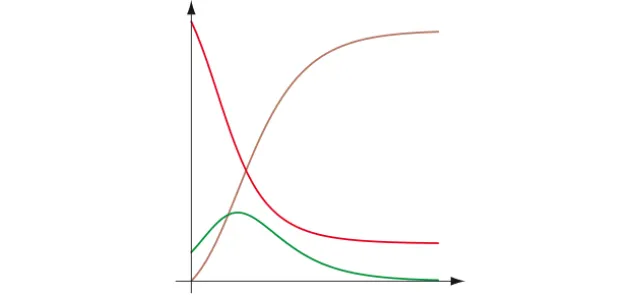
In India in 1897, Ronald Ross, another military doctor—British this time—realizes that this parasite is transmitted to humans through the bite of mosquitoes of the genus Anopheles. Conversely, an infected person can transmit the parasite to an uninfected mosquito when it bites them. That mosquito then infects someone else, and this is how the disease spreads through a population. Ross receives the Nobel Prize in Physiology or Medicine in 1902. Over the following years, he organizes mosquito-control campaigns. In 1911, he proposes a mathematical model showing that malaria can be eradicated without killing every last mosquito in a locality. It is enough to kill sufficient numbers to bring the mosquito population below a certain threshold.
-
The threshold for eradicating the disease
--------------------------------------------