



Mathematics and archaeology
Archaeology is one of those privileged meeting grounds between the humanities and the « hard » sciences. The cutting-edge dating tools such as the carbon 14 method or dendrochronology rely on reliable sources, but these do not always exist. Mathematics is then brought in and provides archaeologists with numerous tools, essentially statistical, such as Bayesian methods, to refine a dating. Factorial analysis of correspondences makes it possible to make connections and bring things together and mathematical models make it possible to consider unusual viewpoints. Thus, some of them, combining human genetics and archaeology, have even made it possible to question the mode of expansion of populations and the myth of great invasions.
All articles in this folder

Settlement waves: A mathematical model | Tangente
Mathematical models developed by mathematician Albert Ammerman and geneticist Luca Cavalli-Sforza, combining human genetics and archaeology, have challenged prevailing accounts of population expansion and the myth of large-scale invasions.
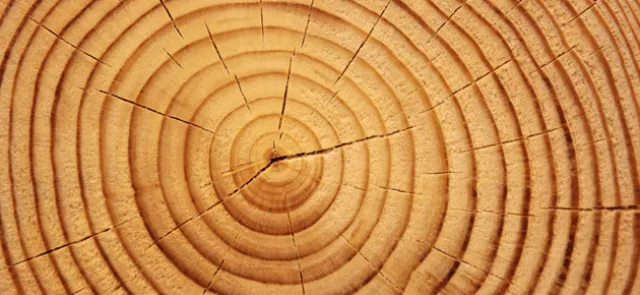
Bayesian statistics applied to dating
When we think of the tools archaeologists use to date objects or events, radiocarbon dating and dendrochronology immediately spring to mind. Mathematical techniques based on probability are also used.
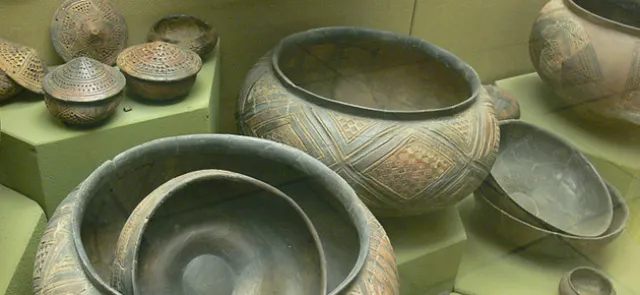
Archaeological chronology: statistical methods | Tangente
To establish a chronology, archaeologists draw on a variety of statistical models, including correspondence analysis. Monte Carlo numerical methods are also brought into play. Mathematics is becoming indispensable to archaeology!
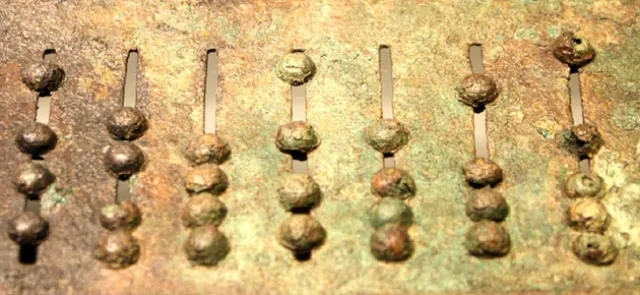
Beneath the paving stones… mathematics – Ancient mathematical instruments | Tangente
Counting, measuring and building: these were the mathematical aims of the Ancients. To achieve them, they created instruments that archaeologists have since unearthed.
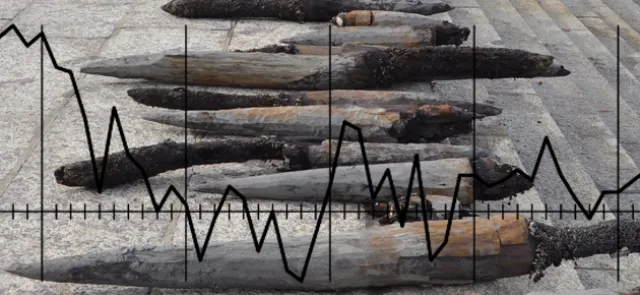
Dendrochronology: dating by tree rings | Tangente
How was a harbour built in Roman times? When was this violin made? When was a mine's infrastructure built? Dendrochronologists seek to answer all these questions by precisely dating objects, structures or remains containing wood.

Jean-Paul Benzécri, father of correspondence analysis | Tangente
Jean-Paul Benzécri (born in 1932) began as a mathematician before turning to multivariate statistics.

Jean-Claude Gardin: a free-thinking archaeologist | Tangente
Few works offer as critical an overview of the state of a discipline as Archéologie théorique, written by Jean-Claude Gardin and published by Hachette in 1979.

Statistical software for archaeology | Tangente
Bayesian statistics has become an essential technique for constructing chronologies of archaeological events.