Dendrochronology is a dating method based on the study of tree rings. Its name comes from the Greek words dendron ("tree"), chronos ("time") and logos ("study").
It grows…
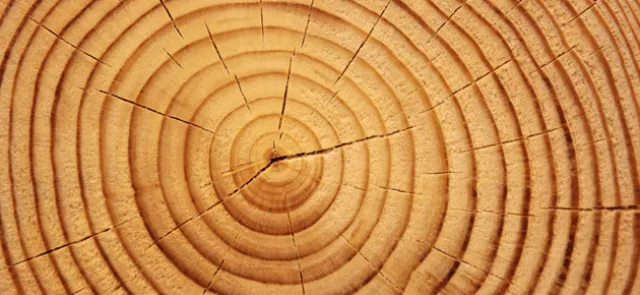
As a tree grows, it becomes taller—and wider. It is this radial growth that interests experts. In temperate regions, trees produce one ring (or growth ring) each year, forming beneath the bark. Examined under a microscope, these rings prove to consist of cells of different sizes. In the part of the trunk closest to the bark, the cambium, these wood cells are alive and play a crucial role. They carry minerals and water from the roots to the leaves or needles, rather like giant drinking straws. In spring, the cambium produces large, thin-walled cells that enable the tree to feed and grow. Light in colour, they form the part of the ring known as earlywood. Towards the end of summer, the tree's growth slows, and the wood cells it produces are smaller, with thicker walls. This darker part of the ring is called latewood. In winter, when the ground is frozen, the tree can no longer draw nutrients from the soil. It stops producing new cells and remains dormant until the following spring.