



The practice of mathematics in China
Taking an interest in other cultures implies stepping out of the natural Eurocentrism that is ours. From then on, questioning the existence of "our" proof, derived from Euclid, in East Asian mathematics becomes obsolete. It is, however, instructive to follow the importation and dissemination of this concept. The study of the impact of this event thus makes it possible to understand the distance between different practices of mathematics. How do we set up an equation? How do we calculate? The methods are numerous and their discovery proves fruitful, including for those that the mathematical tradition in China may have forgotten from its own past.
All articles in this folder
 Podcast
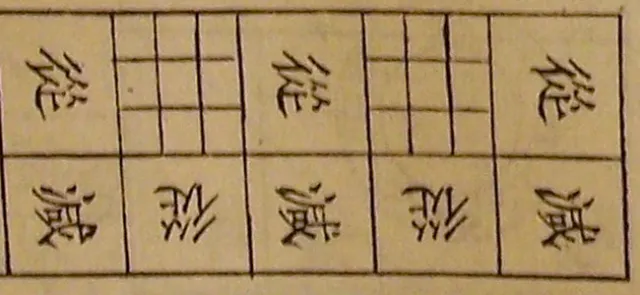
Setting up polynomial equations in medieval China | Tangente
Several methods exist for arriving at a polynomial equation to solve a given problem. The celestial source is the best known but not the only one. This is also an opportunity to see the different strategies of mathematicians in Song-dynasty China.

The Chinese remainder theorem
An early method for what is known as the "Chinese remainder theorem" appears in the Classique mathématique de Maître Sun (Mathematical Classic of Master Sun), but its generalization had to await Qin Jiushao and his Neuf chapitres du traité des nombres (Nine Chapters of the Treatise on Numbers).
 Podcast
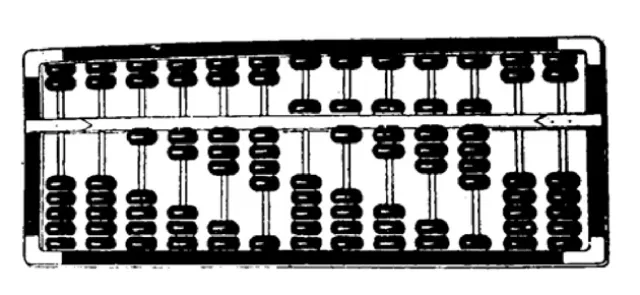
Spread of Chinese math practices, 13th–16th c. | Tangente
The abacus was not the only practical mathematical tool to have existed in China. Concise formulas also made it possible to calculate very quickly. These tools enabled the spread of knowledge over the centuries, thanks to numerous treatises explaining their mechanism.
 Podcast
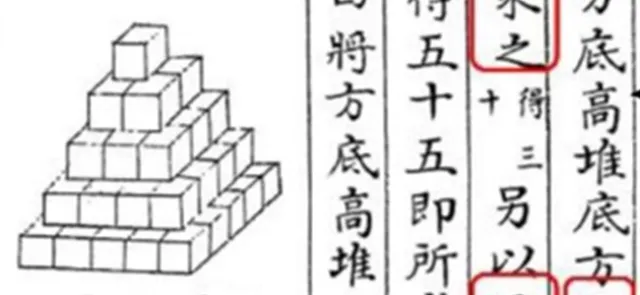
The nonexistent proof in ancient China?
Mathematical proof, which comes from the Greek tradition, is often radically contrasted with Chinese mathematics, where it is absent. In reality, monstration was used there, and an enriching hybridization of mathematical reasoning methods emerges, particularly in the work of Xu Guangqi.
 Podcast
How division was done in China
Once a polynomial equation is given, its roots can be found simply by applying a division algorithm. This algorithm is based on the process of division. Here are its main principles.