



The wonders of logarithms
What a strange character Napier was! Having passed away exactly four hundred years ago, this mathematician managed to transform multiplication into addition and raising to a power into multiplication. He invented logarithms for this purpose, which would enable immense scientific progress. It would later be understood that the logarithm maintains a reciprocity with the exponential function, thus allowing for a development of differential and integral calculus. Although nowadays logarithm tables have been relegated to the attic, logarithms remain a very useful tool, well beyond mathematics.
All articles in this folder

John Napier's astonishing inventions
John Napier of Merchiston, the Scottish gentleman whose death four centuries ago is being commemorated this year, was no revolutionary. Yet his wondrous invention of logarithms made him one, opening up a new world for mathematics far beyond computation.

Logarithms: A whole vocabulary
Logarithmic derivative, logarithmic spiral, logarithmic scales... and a raccoon.
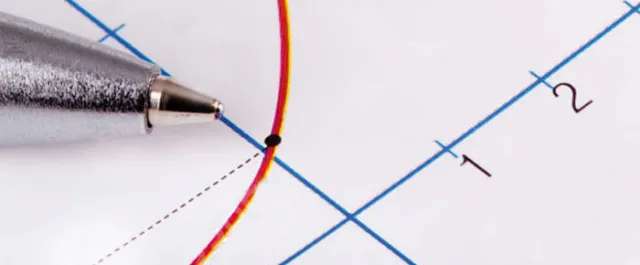
The inverse of the exponential function
The introduction of logarithms can be traced back to the Renaissance, when they were used to solve computational problems. They have since found more theoretical applications and today even lie at the heart of some cryptographic systems—and hence of our computers.

Logarithms come to the table | Tangente Magazine
I'm speaking of a time that those under twenty cannot know...

Logarithms in everyday life | Tangente
Logarithms are also used to establish laws that attempt to account for human subjectivity.
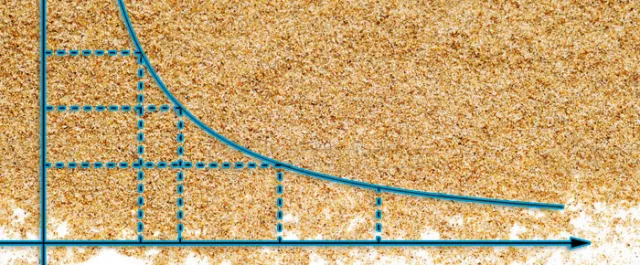
A logarithm beneath the hyperbola | Tangente Magazine
Although Napier introduced them purely as an aid to calculation, logarithms gradually permeated every branch of mathematics. Their fundamental nature emerged particularly clearly through their connections with geometry, trigonometry and the hyperbola.