



Zeteticism
Scientific thinking makes it possible to distinguish between opinion, belief and science. An indispensable tool for every citizen, at the initiative of Henri Broch in the 1980s, it became the subject of scientific methodology teaching for students. He named it zeteticism, thus reviving an old term used by writers and philosophers since Viète. The use of this critical spirit to dismantle paranormal beliefs helped bring zeteticism to public attention. Mathematics, in particular the interpretation of statistics and the famous Simpson's paradox, offer reasoning tools that make it possible to avoid intellectual obscurantism and to demonstrate the perfectly natural character of certain phenomena.
All articles in this folder
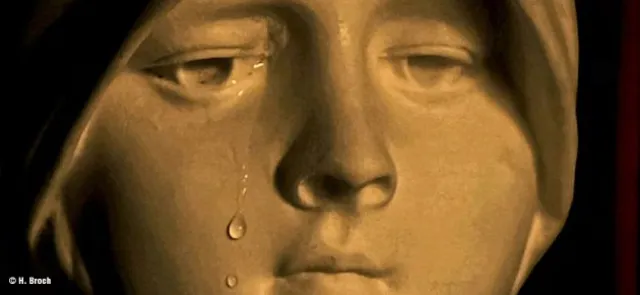
Zetetics, or the art of doubt
In recent years, zetetics has found its way into the science curricula of several universities. Contrary to a common misconception, its scope extends far beyond the mere study of paranormal phenomena…
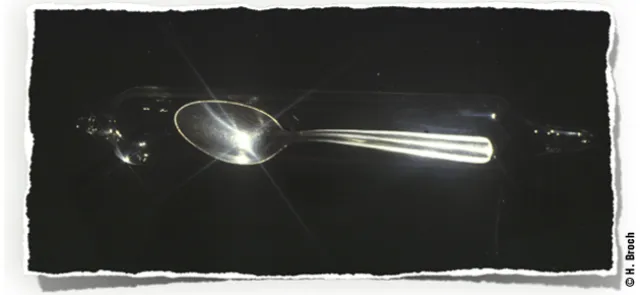
A mathematical approach to the paranormal
When it comes to the paranormal, it may seem easy to separate fact from fiction and use various tests and experiments to prove that a supposed medium or clairvoyant is nothing of the kind. Not so fast! Such protocols are difficult to set up, and few impressionable souls know about the Yule–Simpson paradox...
The leading series on scientific skepticism | Tangente
Henri Broch founded the Book-e-Book publishing house in 2002 to publish works on scientific skepticism.
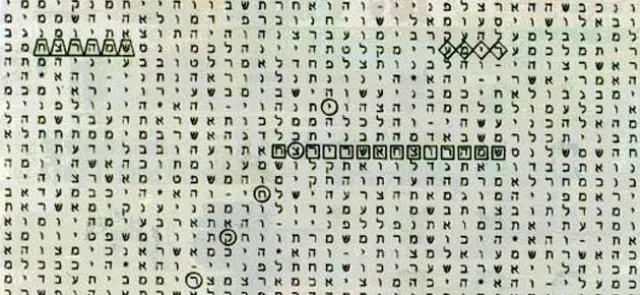
Demystifying the Bible's "secret codes"
Alain said: "You can prove anything you like; the real difficulty is knowing what you want to prove." With the advent of technologies that can produce fake documents, and everyone's desire to invent information that confirms their own ideas, this quotation has a bright future ahead of it...
Pushkin’s poetry and Markov chains | Tangente
Every written language has its own grammatical and lexical structure. Its sounds are represented by recurring patterns of letters whose combinations are far from chaotic.
Objective and perceived reality: biases | Tangente
We are all subject to various biases arising from our senses, our experience, or the conscious and unconscious messages we receive.

The art of making numbers talk
We are awash in numerical and statistical information. Yet even objective, accurate data can be interpreted misleadingly. A little calculation and a sound grasp of error theory can correct some unwarranted conclusions.
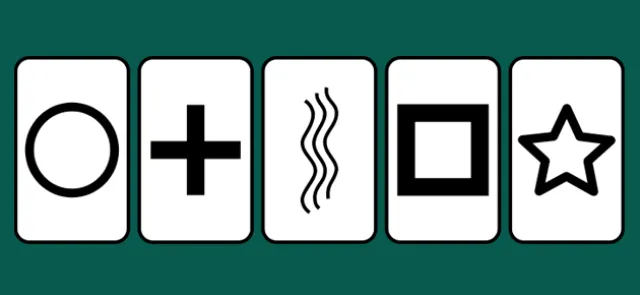
Telepathy
How can we be sure that the predictions made are not the result of a gift of clairvoyance? Profound results in probability, which sometimes seem counterintuitive, can help convince you that the results observed are in fact nothing out of the ordinary...
Russell's teapot and the burden of proof | Tangente
We often hear the phrase "absence of evidence is not evidence of absence." This statement is ambiguous: many fanciful claims cannot be disproved.
Theorizing conspiracy theory through mathematics | Tangente
We often encounter the outlandish claims made by conspiracy-theory enthusiasts. But can we use theory itself to show just how implausible they are?
François Viète and algebraic zetetics | Tangente
Henri Broch revived the word "zetetics." Long before him, François Viète (1540–1603) had already used it in a slightly different sense.
Intellectual self-defense: zetetics courses | Tangente
Cortecs (Collective for Transdisciplinary Research on Critical Thinking & Science) is a teaching and research collective founded in 2010 to produce educational resources and scientific content, as well as courses and training in critical thinking, intellectual self-defense, zetetics and the scientific method.
Promoting reliable science communication | Tangente
Since 1968, the French Association for Scientific Information (AFIS) has published the quarterly magazine Science et Pseudo-Sciences. Its aims are to promote science and combat those who invoke its name as a cover for quackery.