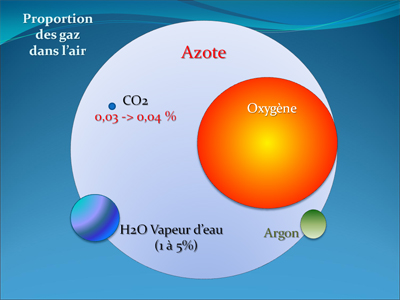
Out of every ten thousand molecules of dry air, four are carbon dioxide molecules. A century ago there was one fewer: an increase of 33%, albeit from a very low level. Up to five hundred water-vapor molecules may also be present.
Water and carbon dioxide molecules consist of at least two different kinds of atoms (two hydrogen atoms, H, and one oxygen atom, O, form a water molecule, H 2O, while one carbon atom, C, and two oxygen atoms form a carbon dioxide molecule, CO2). The vibrations of these molecules absorb Earth's thermal radiation at specific frequencies: 20 and 70 THz (terahertz, or 1012 hertz) in the case of CO2.
Is one additional CO2 molecule in every ten thousand or ten thousand five hundred, attributable to more than a century of burning coal, oil, and natural gas, too many? For example, through photosynthesis, this increase strengthens the role of CO2 as food for vegetation starved of its favorite nutrient. In thirty-three years, this additional supply has enriched the planet by the equivalent of a sixth green continent, covering eighteen million square kilometers—more than thirty times the area of metropolitan France. The benefit to humanity from the resulting growth in food crops was estimated at three trillion euros between 1961 and 2011. Far from being a wrongly vilified "pollutant," CO2 is a free fertilizer, benefiting vegetation and crops.
-