




Maths et développement durable
This issue is not fully translated into English yet; only translated content is shown.
Read the French versionAll folders in this issue

Leverage the models
Questions related to the exploitation, management and redistribution of resources are among the most important that have been posed to our societies. These resources also generate pollution, the effects of which on our health it is important to understand. Whether it is water management or energy production, it has become imperative to mobilize all skills to optimize access for the greatest number. Mathematics is at the forefront by proposing methodologies and models, which will be the source of scientists' measurements, interpretations and conclusions.

Carbon, climate, energy
The Earth is warming, it is a statistical fact. With human responsibility being pointed out, more and more countries are encouraging "greener" initiatives, such as replacing coal with electric energy. Is the latter as virtuous as claimed? The interpretation of available data and some elementary calculations allow us to keep a cool head.

Human geography and biodiversity
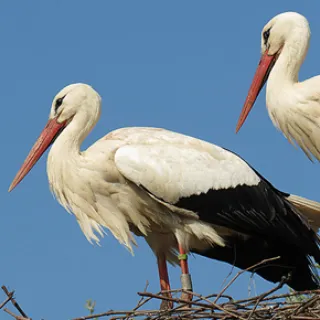
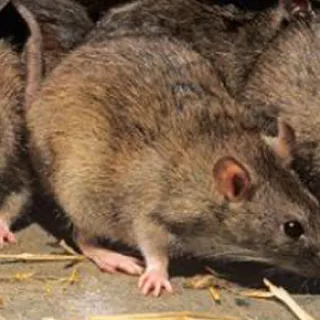
Understanding the complexity of biodiversity requires reliable and realistic modeling of ecosystems. Mathematics offers several types of tools, such as dynamical systems for predator–prey models, or linear algebra to understand population evolution dynamics. It is important to master these techniques that are extremely sensitive to initial conditions, parameter precision and calculation errors, under penalty of predicting the extinction of a non-threatened population… or the opposite.
All articles in this issue

Sustainable development: an oxymoron?
An oxymoron is a figure of speech that brings together two seemingly contradictory terms. Thus, in Le Cid (1637), Corneille coined the phrase “that dark radiance falling from the stars”

Development, yes—but why "sustainable"?
The first criticisms of economic development based on the overexploitation of natural resources emerged in the late 1960s.
Biodiversity: a very fashionable portmanteau
What does "biodiversity" mean? Where does the word come from? Even without knowing it, we think we understand what it means

Mobile structures and solar games for young people
Philippe Debouclans, a pioneer in solar-energy education, brought together a team to introduce young people to renewable energy through workshops featuring games and construction activities using his range of Héliobil toys.

Bringing journalists and scientists together for a day
In an unprecedented initiative, journalists and scientists joined forces for an entire day to make sense of the news

Art as a way to interpret numbers
The digital artwork Exit illustrates global population movements

Where do the figures come from?
Public authorities and the media release all kinds of figures, presenting them as indisputable facts. Where do all these numerical data come from? Where can we find them—in online sources, studies or elsewhere? How can we form an informed opinion?
How SNCF fares are polluting France
More and more travelers are wondering whether, in the end, driving might be cheaper.

Pierre Samuel, the first scientifically minded environmentalist
Pierre Samuel (1921–2009) was one of the greatest French mathematicians of the 20th century. He became deeply interested in environmental issues.

Forecasting the world's population
There was much discussion in 2017 following a UN study: the world's population, currently at seven billion, will reach almost ten billion in 2050.