A polluting measure
--------------------
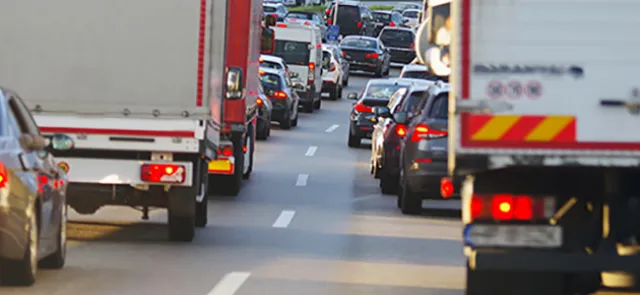
It does not take an advanced education to understand that free-flowing traffic reduces emissions, while congestion increases them. Yet closing the riverside roads—and carrying out roadworks on the outer boulevards—causes numerous traffic jams, wiping out the benefit of the estimated 30% reduction in the number of vehicles on the road.
Let's do a simple calculation: on average, one million vehicles enter and leave Paris each weekday—70% of the previous figure—not counting journeys made within the city. The slowdown caused by poor traffic flow delays them by a total of about an hour each day, or even more, thus doubling the time their engines are running and, consequently, their emissions, which therefore amount to roughly 140% of the previous total. It should also be noted that braking systems, particularly those on buses, account for 40% of particulate emissions. Needless to say, they are used extremely heavily in traffic jams…
-
Harmful consequences for the economy
-----------------------------------------
Cars travelling in Paris are generally used for work. Their drivers have no alternatives, so the deterrent effect of traffic jams cannot change this.
As shown opposite, the resulting slowdown costs at least one million hours per weekday. Even at the minimum wage, this is equivalent to ten million euros a day, in addition to roughly one million euros' worth of fuel. Over a year, this amounts to at least two and a half billion euros, borne by drivers and their employers.
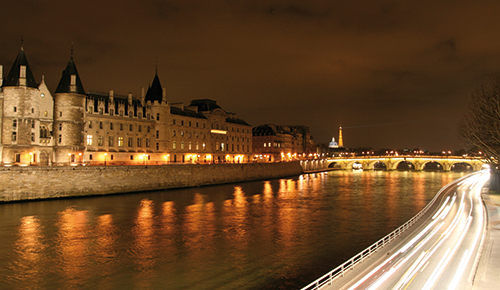
Moreover, this calculation does not include the losses incurred by Parisians who drive or by those who take buses delayed by traffic jams despite their dedicated lanes—as anyone travelling along the quays can see.
-
An antisocial policy?
----------------------------
Nearly half of Parisians have given up owning a car. A few years ago, a great many of them owned one, even if they did not use it in Paris. Progress? No, because owning a car means being free to go wherever and whenever you wish, without being at the mercy of public transport and its costs.
So what prompted them to give up this instrument of freedom? The ever-rising cost of on-street parking and car parks\*. Municipal policy has driven parking charges to levels that those on lower incomes cannot afford, forcing them to give up owning a car, although one remains extremely useful for certain journeys in poorly served regions, particularly during holiday periods.
\* In some districts, 20% of the vehicles on the road are looking for somewhere to park. On reaching the area near the Boulevard Périphérique, a substantial proportion of motorists would switch to public transport if they could park easily.
-
Pedestrians and two-wheeler riders at risk of accidents
-------------------------------------------
In recent years, official road-safety statistics have shown that pedestrians, cyclists and users of motorized two-wheelers now account for more than 80% of those killed in Paris—40 in 2016—and of those injured and admitted to hospital—767 in 2016. The introduction of bus lanes in which two-wheelers are allowed to travel, together with a lax policy that encourages them to run red lights or ride against the flow of traffic, leads to accidents causing injury in every city that has adopted this approach. Yet the decision-makers in these municipalities do not seem to be considering reversing these measures.