Intelligence agencies have a little-known history, as their achievements long remained classified. It was not until 1967, for example, that the Germans learned that the French had decrypted their messages throughout almost the entire First World War! Georges Painvin and his adversary Fritz Nebel, who created the German ADFGVX cipher in 1918 (see the opening article in this dossier), were very old by the time the French army's codebreaking successes were made public.
History repeated itself during the Second World War, when the emblematic figure was Alan Turing (1912–1954), who sadly did not live to receive public recognition…
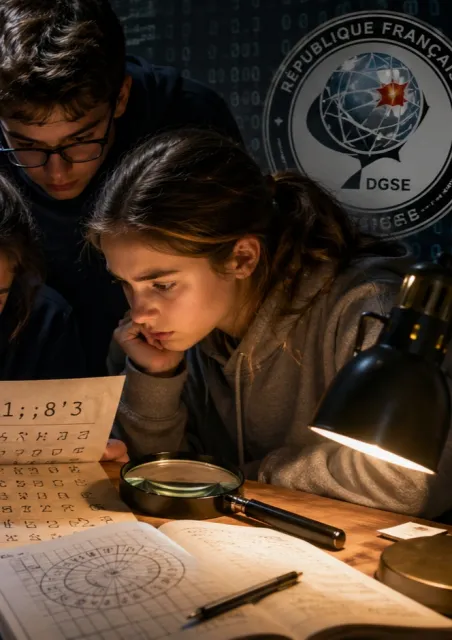
Today, codebreaking remains an important part of intelligence work. Witness the cryptology competition organized by the US National Security Agency (NSA), whose problems can be found online, and the Al-Kindi competition, organized by the association Animath under the patronage of the Direction générale de la sécurité extérieure (DGSE).
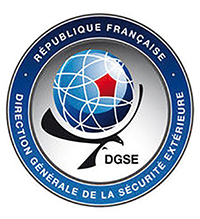
The DGSE logo depicts France (in red) and its networks around the globe.
The black bird of prey evokes its capacity for offensive action.
The mathematics of intelligence
----------------------------------
Naturally, France has established the Pôle national de cryptanalyse et de décryptement (PNCD), tasked with breaking encrypted messages. To do so, it has a powerful supercomputer buried deep beneath the DGSE headquarters on Boulevard Mortier in Paris.