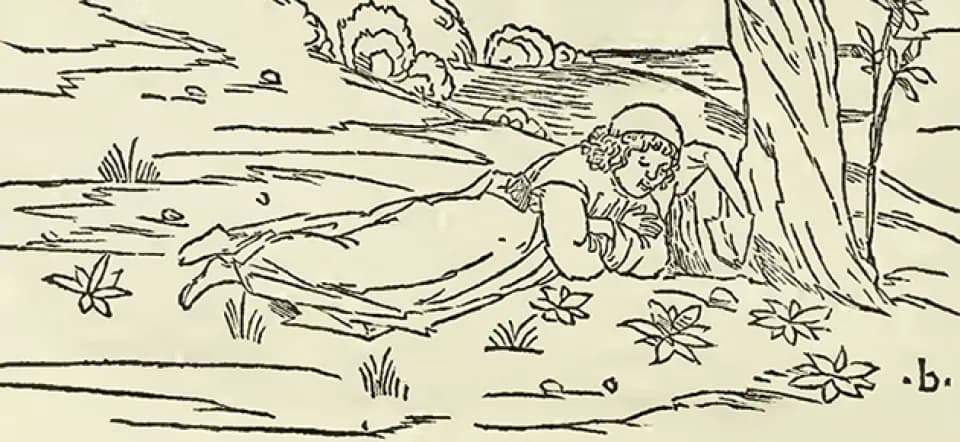
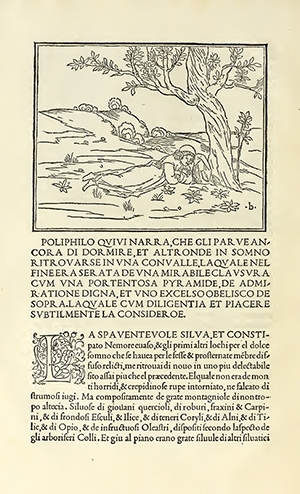
1545 edition of the Hypnerotomachia Poliphili.
Herodotus recounts two famous examples in the Histories, both more than 2,500 years old and attesting to the ancient origins of steganography:
> "Histiaeus, wishing to tell Aristagoras to revolt, could find no other way to do so safely, since the roads were closely guarded. He had his most faithful slave's head shaved, tattooed characters on it, and waited for his hair to grow back. Once it had, he immediately sent him to Miletus, instructing him merely to tell Aristagoras on arrival to shave his head and then examine it." (Book V)
> "Be that as it may, once Xerxes had resolved to wage war against the Greeks, Demaratus, who was in Susa and had learned of his plans, wished to inform the Lacedaemonians. But since he had no means of doing so without risking discovery, he devised the following stratagem. He took a pair of writing tablets, scraped off the wax, and wrote the king's plans on the wood beneath. He then covered the writing with wax, so that the tablets would appear blank and their bearer would come to no harm at the hands of those guarding the routes." (Book VII)