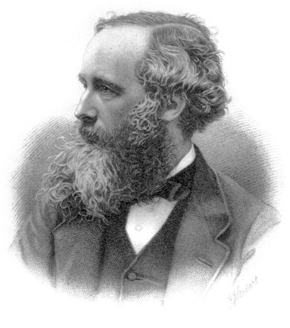
Opposite: James Clerk Maxwell (1831–1879).
Yellow amber, a kind of resin with electrostatic properties, had been known since antiquity. When rubbed, it attracted objects. The Greek word for "amber" is elektron, which gave rise to the word "electricity" around 1733. At the time, scientists were studying how electricity affected objects when they were rubbed with cloth or cat fur. The science of electricity gradually emerged from simple observations of natural phenomena.
Magnetism developed alongside it, with the compass as its first practical application. In the 18th century, innovative experiments began to quantify these phenomena. Several scholars of the period had suggested a law governing the interaction between electric and magnetic charges. Coulomb ultimately established it through a series of remarkably precise experiments presented between 1785 and 1791.
-