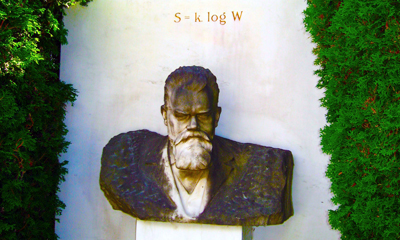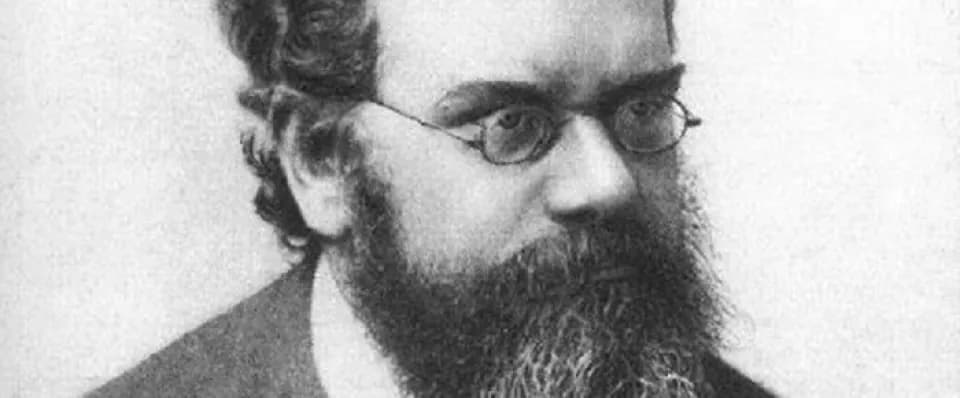

At the University of Vienna, Ludwig Boltzmann studies under Josef Stefan. In 1867, after earning a doctorate in... philosophy, he becomes Stefan's assistant. Those years in the Austrian capital, amid intense research despite limited resources, leave a profound mark on him. There he meets the physicist and chemist Johann Joseph Loschmidt, for whom he retains great respect despite their later controversies.
In the mid-19th century, two conceptions of physics are at odds. A large majority of physicists advocate a phenomenological account of mechanics; they are known as the energeticists. They have achieved major successes, such as Fourier's theory (see the article "Joseph Fourier, Pioneer of Mathematical Physics"), in which heat is regarded and modeled as a fluid.