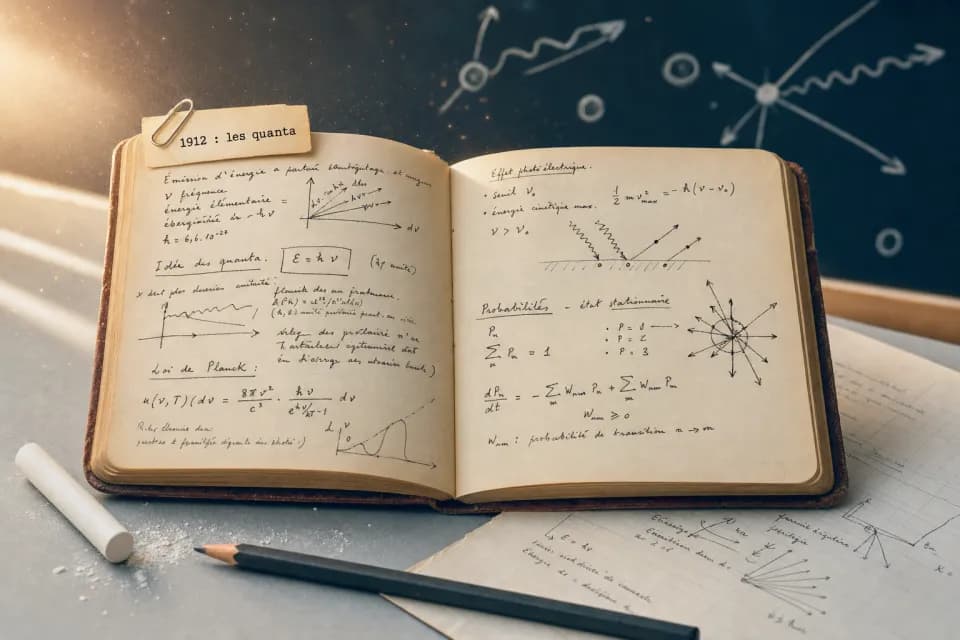
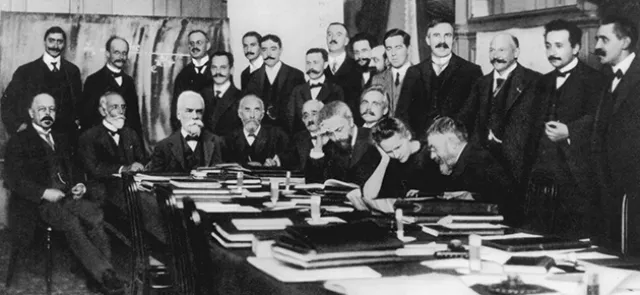
Émile Borel took an interest in physics, particularly the new quantum theories, by attending Paul Langevin's course. His notebook is an invaluable testimony to the ferment of the period, penned by a mathematician well versed in probability.
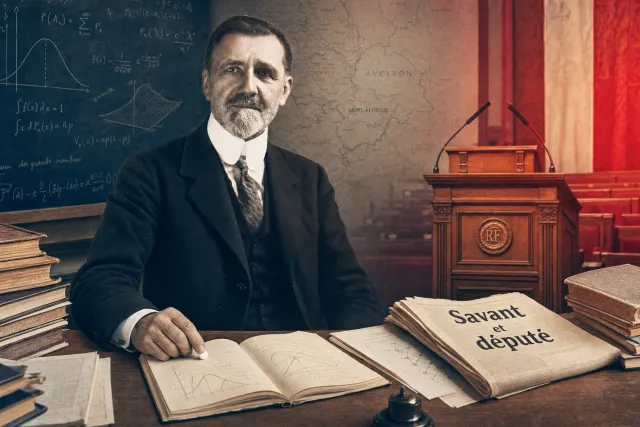
A major figure on the scientific and academic scene in France in the first half of the 20th century, Émile Borel defended a doctoral thesis in June 1894 on Quelques points de la théorie des fonctions (Some Points in the Theory of Functions). It marks the very beginning of measure theory (see the article "La mesure et le hasard"), which his courses on functions would allow him to refine. Borel first taught at the University of Lille, where he was appointed lecturer (1893), then at the Faculté des sciences in Paris, where he obtained the chair of Function Theory (1909).
A man of action, a popularizer and an engaged intellectual, he was, as a mathematician, both an analyst and a probabilist.
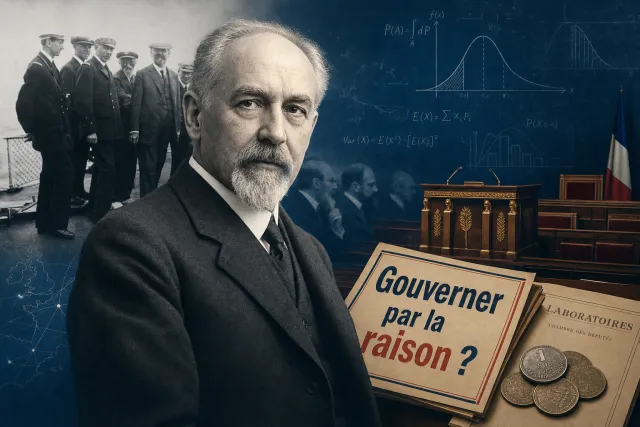
Borel's interest in probability emerged in the mid-1900s against the backdrop of a complex set of events. These belonged first to the mathematical sphere, with a growing detachment from a Cantorian view of the transfinite and the maturing of measure theory; then to the social and political sphere, with the development of a conception of the scientist's role in society and in the management of individual life; and finally to the sphere of editorial activism.
Alongside the Revue du Mois (see the article "Émile Borel et la république des professeurs"), Borel published a series of Monographies sur la théorie des fonctions (Monographs on Function Theory), drawn from his university teaching.