



History and Culture
Dive into the fascinating world of mathematics with our captivating articles, written by passionate experts. Whether you are a curious amateur or a seasoned mathematician, our articles cover a wide range of topics, from fundamental concepts to the latest discoveries, including practical applications and philosophical reflections.
 Podcast
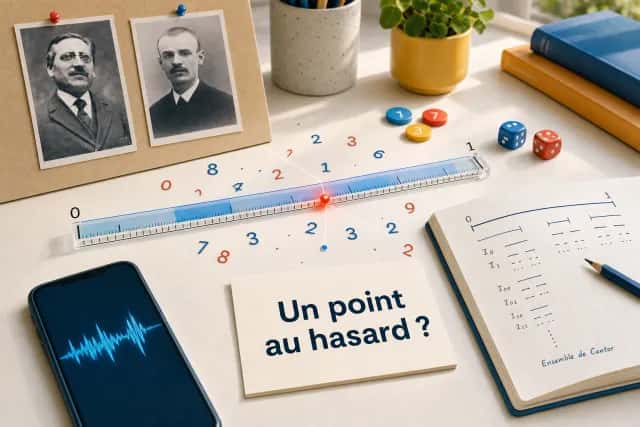
Measuring infinity: how Borel and Lebesgue went beyond Newton
Explore Lebesgue measure, Borel's normal numbers and the foundations of probability theory through the history of mathematics.
 Podcast
Normal numbers: The Library of Babel hides your password
Explore the normal numbers defined by Borel in 1909, revealed through the literary analogy of Borges's Library of Babel. A meeting point of number theory, probability, and analysis.
 Podcast
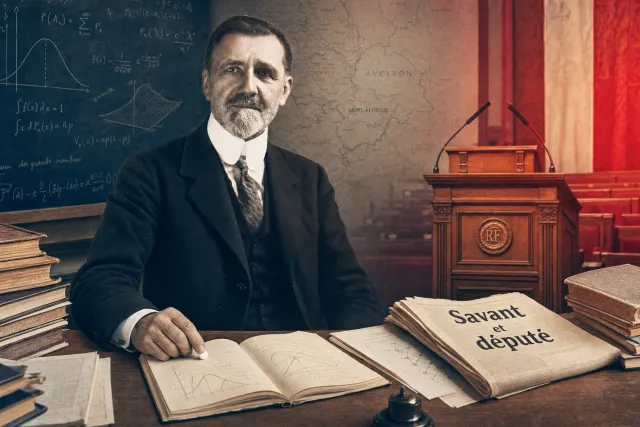
How a specialist in probability becomes a pillar of the Republic of Professors
A portrait of Émile Borel, the illustrious mathematician of the Belle Époque, who combined a brilliant scientific career with political engagement and a fight for justice.
 Podcast
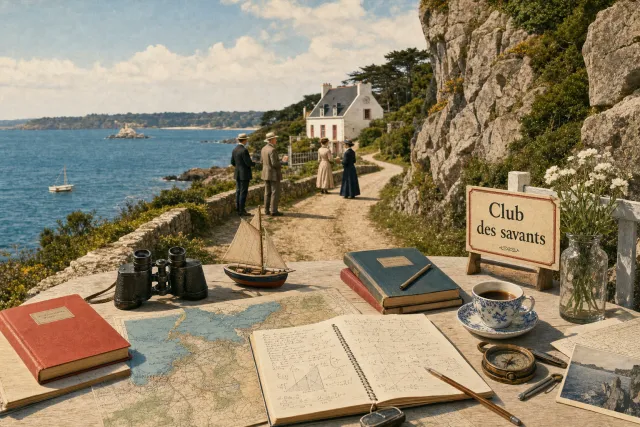
Marie Curie, Borel, Perrin: a scholarly circle on a Breton peninsula
The Arcouest peninsula, near Paimpol, was a regular holiday retreat for many academics, including Émile Borel and Marie Curie.
 Podcast
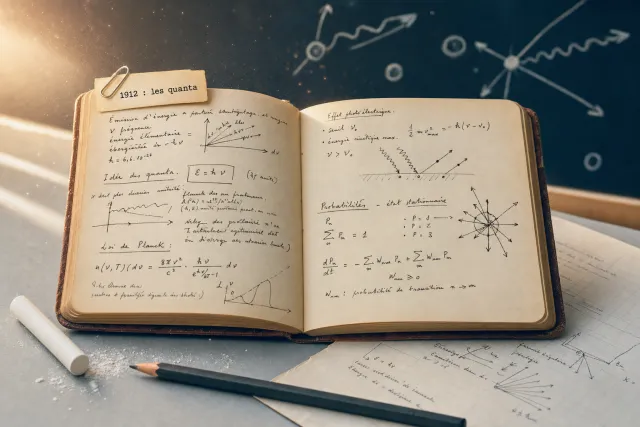
Émile Borel: probability at the cradle of quantum theory
Émile Borel's notebook on Paul Langevin's course at the Collège de France: a unique testimony to the scientific ferment surrounding quanta.
 Podcast
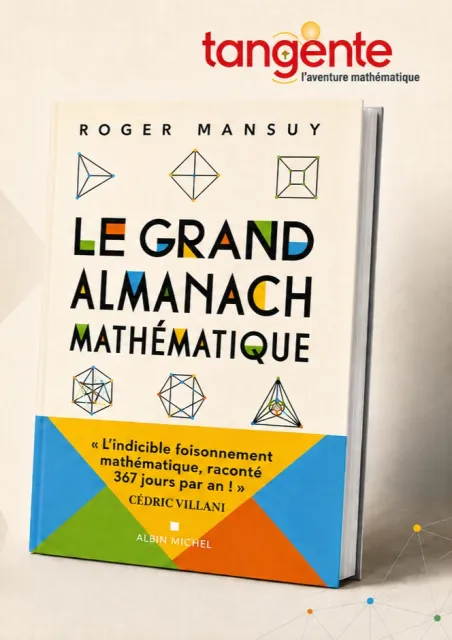
Tangente Prize 2026: Roger Mansuy honored for his Grand almanach mathématique
The 2026 Tangente Prize was awarded to Roger Mansuy for his Grand almanach mathématique, at the Salon culture et jeux mathématiques in Paris.
 Podcast
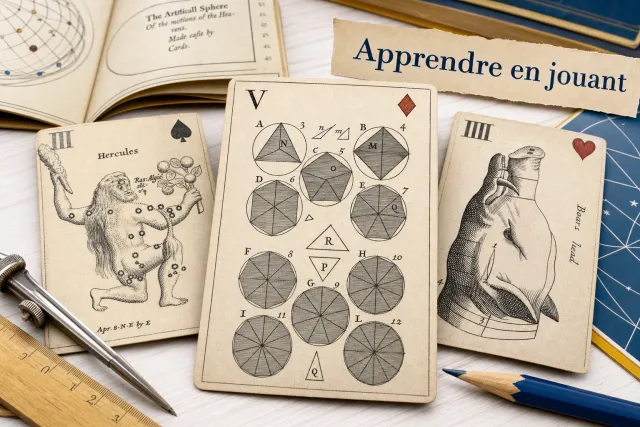
52 playing cards to learn astronomy and geometry
In the 17th century, Joseph Moxon and his son James published educational playing cards for learning astronomy, geometry and the art of carving.
 Podcast
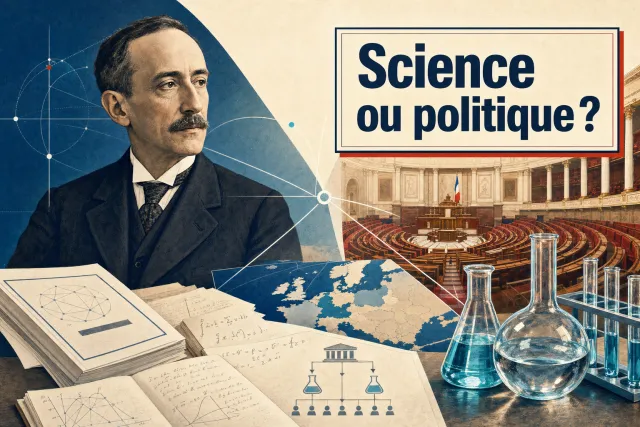
Émile Borel: Why fund a thousand researchers to find one?
A portrait of Émile Borel's commitment to funding scientific research, European cooperation, and the evolution of his political thought from radicalism to liberalism.
 Podcast
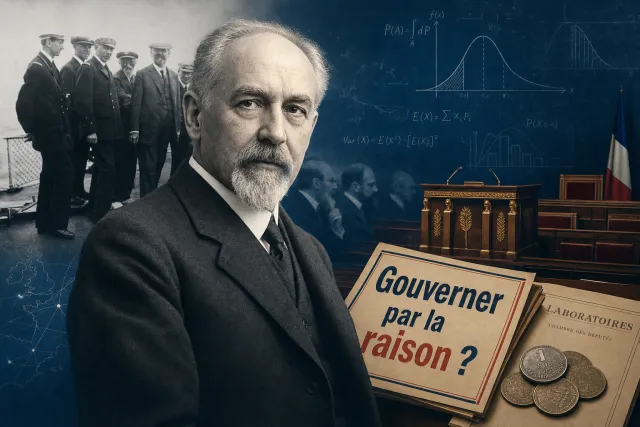
Can you govern a country the way you solve an equation?
A portrait of Émile Borel, an École normale supérieure alumnus and scholar who combined a scientific career with political activism, from Dreyfusism to the Resistance, through radicalism and international intellectual cooperation.
 Podcast
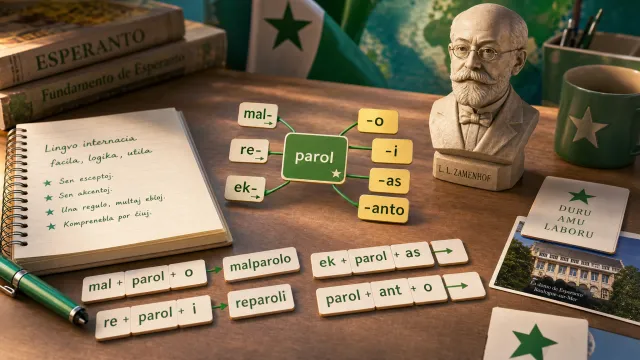
Esperanto and mathematics: a coherent universal language
Esperanto, created by Zamenhof in 1887, shares mathematics’ ideal of perfect coherence. Discover why this constructed language fascinates logicians and mathematicians.