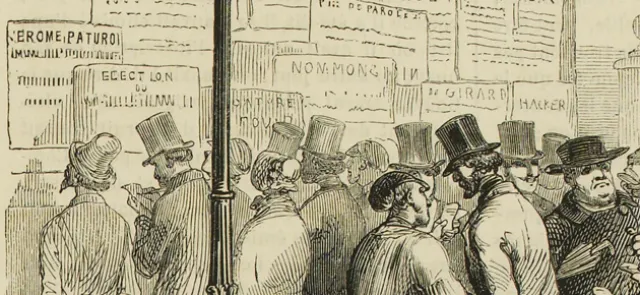
Before 1981, municipal elections in municipalities with more than twenty thousand inhabitants were held in two rounds, and the winning list took every seat on the municipal council. In other municipalities, candidates were elected individually, so voters could mix candidates from the competing lists. In his proposals, François Mitterrand, a candidate in the 1981 presidential election, had promised that opposition groups would be able to be represented on municipal councils; he had been told in response that full proportional representation might make municipalities ungovernable.
Municipalities with 1,000 inhabitants or more
-----------------------
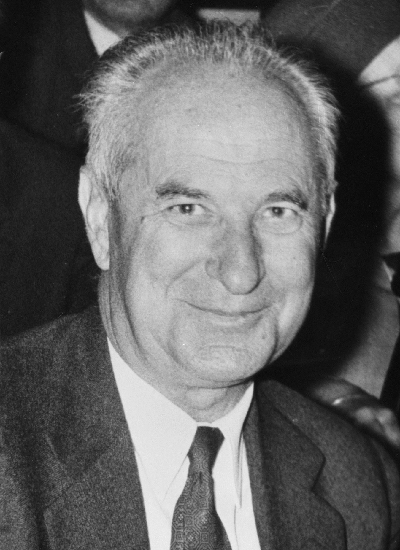
Once elected, the new president asked his Minister of the Interior, Gaston Defferre (1910–1986), to draft a new electoral law reconciling these two constraints. The Decentralization Act of March 2, 1982 therefore introduced a new voting system in municipalities with more than 3,500 inhabitants (this threshold was lowered to 1,000 inhabitants in 2013). The number of seats, which is always odd, is determined according to population—for example, 55 for a municipality with between 100,000 and 149,999 inhabitants. If a list wins an absolute majority of the votes cast in the first round, it receives half the seats, rounded up (28 in our example) if more than four seats are being allocated, and rounded down otherwise; the other half is distributed among all lists that received at least 5% of the votes cast, including the winner, using the highest averages method. Otherwise, only lists that received at least 10% of the votes cast may stand in the second round. However, lists that have qualified for the second round may merge; moreover, a list that received at least 5% of the votes may merge with one that qualified for the second round. After the vote, seats are allocated in the same way as in the first round.