One of Newtonian science's major contributions is its notion of space. Yet for the physicist and mathematician, the place occupied by the world is far more than a mere container for Cartesian coordinates: it must also be understood through the Bible and Jewish mysticism. The result is a textbook example of how scientific and religious thought can be brought together.
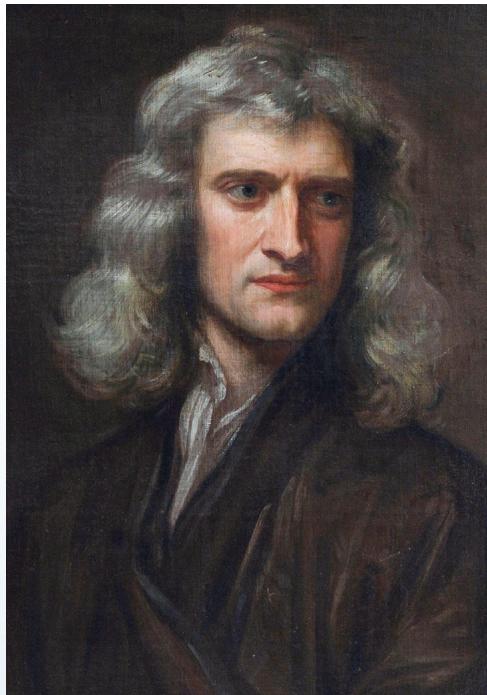
William Stukeley, a physician and friend of Isaac Newton, recounts in his memoirs that on April 15, 1726, as they drank tea in the shade of apple trees, Newton confided that the question of gravity had occurred to him in similar circumstances long before, while he was sitting in a contemplative mood.
At the University of Cambridge, a scion of this apple tree stands beneath the windows of Newton's former rooms at Trinity College. Steeped in history, the site reminds us that some of science's most abstract questions arose from silent, contemplative attention.
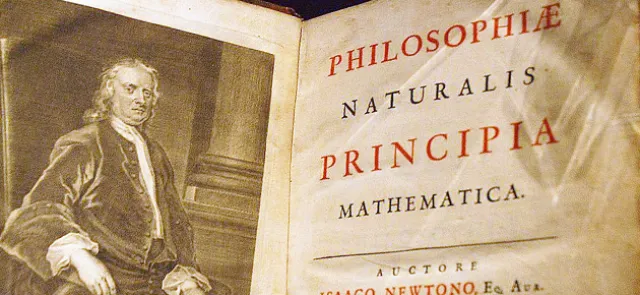
At the time of this scene, however, Newton was not merely a solitary observer. He was already deeply involved in university life, having held the Lucasian Chair of Mathematics at the University of Cambridge from 1669, when he was twenty-six, until 1702. It was there that he developed the mathematical and conceptual tools required for a new understanding of how bodies move through space.