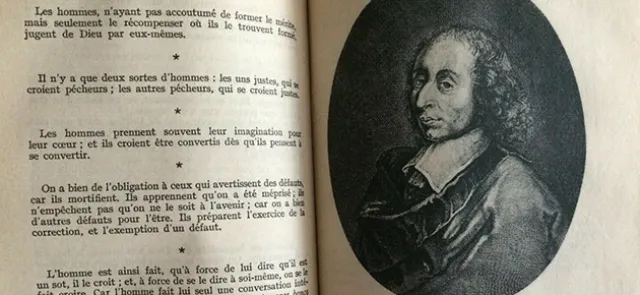
Could Blaise Pascal have anticipated the launch of France's first omnibuses in Nantes (Loire-Atlantique) by 150 years? The few available sources contradict one another.
Some facts are beyond dispute. What is certain is that on 29 October 1661, after two or three years of thought, Pascal and his close friend Artus Gouffier, Duke of Roannez (1627–1696), founded a transport company, soon joined by the Marquis de Sourches and the Marquis de Crenan. The financial investment was substantial: Pascal poured every last penny into it, including the dowry of his late younger sister Jacqueline. A private agreement divided the company into six shares: three for the Duke of Roannez, one for Pascal, one for the Marquis de Crenan and the final share for Simon Arnauld, Lord of Pomponne. On 25 November that same year, the Council received a petition for a royal privilege, seeking permission to operate "coaches that would always follow the same routes through Paris from one district to another, […] for five marked sols […] and would always depart at fixed times, however few passengers there might be, even empty if no one presented themselves, without those using this convenience being required to pay more than the price of their seats". The petition was examined on 19 January 1662, with Louis XIV himself signing the letters patent authorizing the new service. On 27 February, the Parlement of Paris registered the letters, though not without introducing a few restrictions. The privilege was granted, allowing the first coaches to enter service on 18 March 1662.
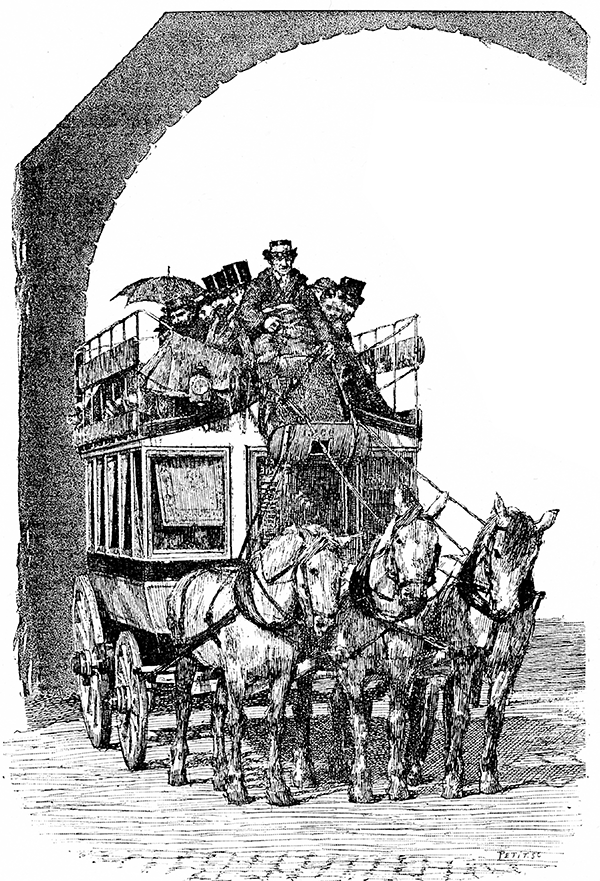
Omnibus with a three-horse team, Paris, 1890, engraving by Auguste Vitu.
For Luxembourg, change at rue Saint-Antoine
----------------------------------------------