Blaise Pascal
This issue is not fully translated into English yet; only translated content is shown.
Read the French versionAll folders in this issue

Bold contributions to mathematics
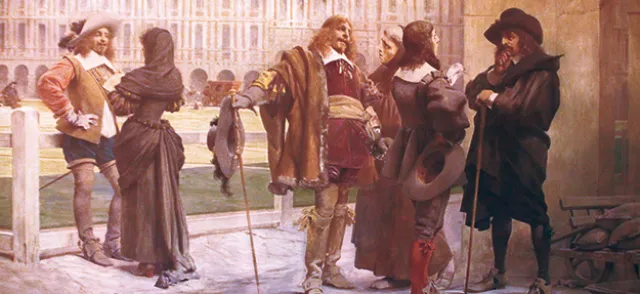
Blaise Pascal viewed geometry as the most beautiful profession. Seduced from a very young age by the classics of mathematical literature that his father entrusted to him, he devoured them until producing new results himself. He also developed new ways of reasoning by proving several properties by induction, a novel fact at the time. Arithmetic, conics, genesis of probability and combinatorics: all the domains attracted the prodigy from Clermont.

A mind curious about science
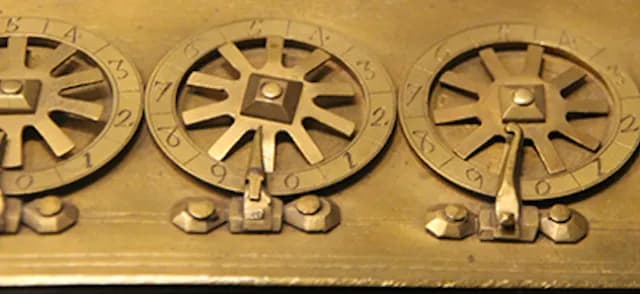
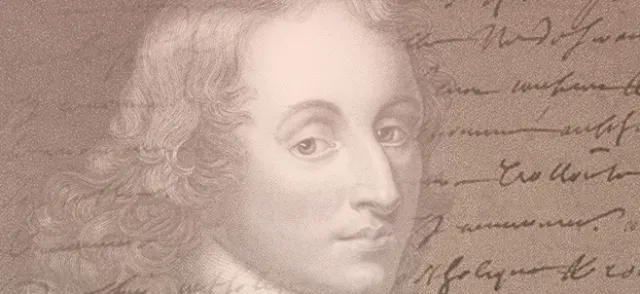
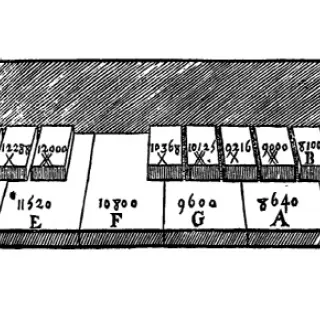
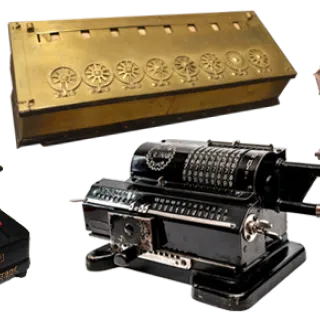
Pascal's agile mind was kept bubbling by an insatiable curiosity. His precocious genius expresses itself thus in a study of sounds whose good craftsmanship astonishes for his age. Later, he engages successfully in the debates on the existence of the void. Fearing no epistemological leap, and not without a certain taste for controversy, he proves with flair in a famous experiment the accuracy of his reasonings. He does not hesitate to 'put his hand to the work' to make his ideas concrete, as in the design of his calculating machine, a small marvel of clockwork and mechanics.
A genius inscribed in his century
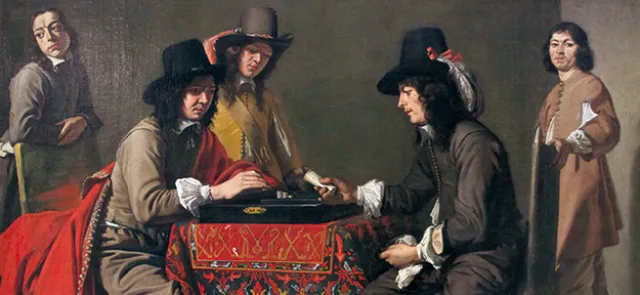
If we sometimes have the image of a most ascetic Blaise Pascal, retired in a monastery, we must not forget his multiple faces. He also experienced a breathless social life, as shown by his interest in the notion of wager prompted by games of chance. He is also a savvy entrepreneur who knows how to spot innovative or visionary ideas. Pascal is involved in many debates of his time, in science, in theology or in philosophy. The quality of his writing, his caustic humor and the solidity of his reasoning hit the mark.