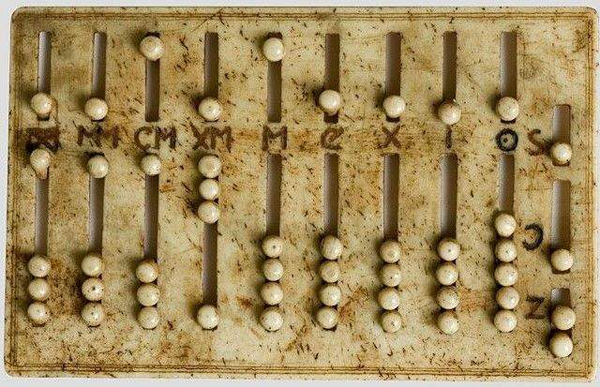
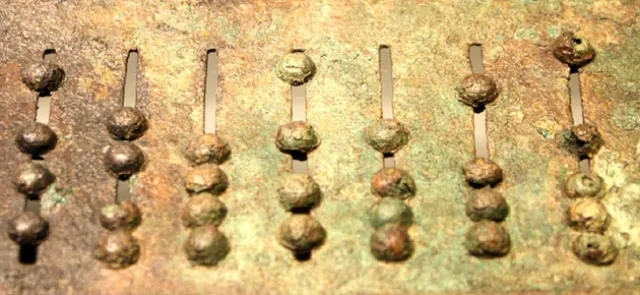
Historian of technology Herbert Bruderer (ETH Zurich, blog@cacm) has launched an appeal to find a rare type of pocket calculator: a Roman ivory abacus dating from between the 2nd and 5th centuries CE. Each groove has four unit beads at the bottom and one bead representing five units at the top. The groove on the right is used for calculations with fractions in the duodecimal system, using ounces (1/12 of an as) and fractions of an ounce. At the top, next to the S, are the half-ounces. In the middle, near the reversed C, are the quarter-ounces, and at the bottom, represented by the Z, are the thirds of an ounce.
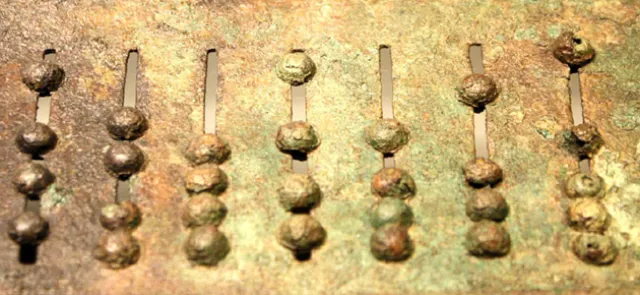
Three examples are currently known: one at the Bibliothèque nationale de France (Paris), one at the Palazzo Massimo alle Terme in Rome, and one at the Regional Archaeological Museum in Aosta (Italy). A fourth example, this one made of ivory, was once in circulation: it belonged to IBM Europe's collection of antique calculating tools. Alas! IBM Europe no longer exists, the collection was dispersed, perhaps sold at auction, and the precious object vanished. Many experts are concerned. Has this unique object been lost?