



DANIEL JUSTENS
90 articles published in Tangente
 History and CultureN°69Jan 18, 2019
Approximations in physics
They trouble mathematicians, for whom sin(x) can never equal x when x is a nonzero but "small" real number. Yet they are useful! "They"? Approximations!
Read → History and CultureN°69Jan 17, 2019
Claude Mydorge:
A keen enthusiast for geometry, Claude Mydorge collaborated with René Descartes. His interest in conic sections led him to study the laws of optics and astronomy. He also developed a particular fondness for mathematical games and recreations.
Read → Math for everyoneN°184Sep 25, 2018
Using maths to expose an advertising scam
The Belgian National Lottery has just changed its prize rules. New winning combinations have been introduced for Lotto (with two "t"s), offering new (small) prizes.
Read → Math for everyoneN°184Sep 25, 2018
Ponzi schemes
Pyramid investment schemes, which pay early investors with funds contributed by later ones, have shown their limitations. They can be modeled. Curiously, however, some government practices are not so very different from these models…
Read → Math for everyoneN°183Jul 17, 2018
A deep connection with determinism
Many physical and economic phenomena are described by differential equations. This implies, in particular, that the functions we seek are differentiable, but also that the phenomena concerned are locally deterministic.
Read → Math for everyoneN°181Mar 18, 2018
How Big Data can help insurance
The press sometimes claims that insurers' access to ever-larger databases will soon enable them to assess each customer's risk perfectly and set a perfectly tailored premium. This new paradigm might even spell the end of insurance itself! But is that really so?
Read →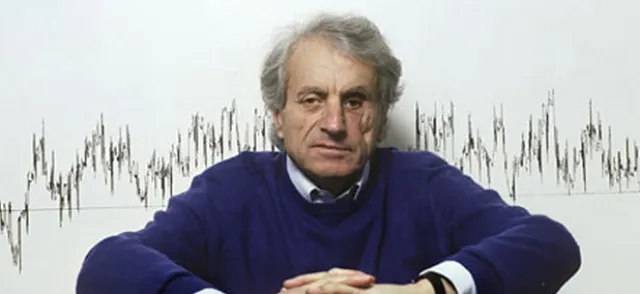 Math for everyoneN°65Dec 30, 2017
Yannis Xenakis's "musical vector spaces"
In 1963, the celebrated composer Yannis Xenakis introduced a kind of arithmetic for musical composition, based on the notion of mathematical structure—in particular, that of a vector space. This artistic contribution lends itself wonderfully to scientific analysis.
Read → Math for everyoneN°178Sep 28, 2017
The value of polar coordinates
Using integral calculus to calculate areas can sometimes be cumbersome in Cartesian coordinates. Switching to polar coordinates can then be a considerable help. It also makes it possible to normalize the normal distribution in probability.
Read → Math for everyoneN°178Sep 27, 2017
Maryam Mirzakhani: a star has just gone out
The brilliant Iranian mathematician Maryam Mirzakhani died of breast cancer on 15 July 2017, at the age of 40
Read → Math for everyoneN°64Sep 12, 2017
The mosaics of the Alhambra in Granada
The decorative patterns of the Alhambra in Granada, a fortress built in the 14th century, encompass all the symmetry groups of plane tilings that can be repeated using two nonparallel translations. But this finding is recent, incomplete and somewhat controversial...
Read →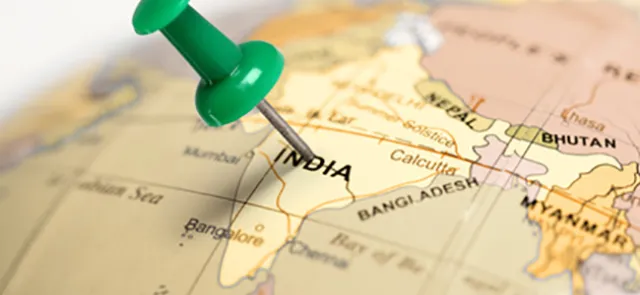 Math for everyoneN°176May 23, 2017
The grossly misnamed "Pascal's triangle"
"Pascal's triangle" may have been discovered by Indians more than two thousand years ago. It reached the Arab-Muslim world and China as early as the 11th century. It did not appear in Europe until the 16th century, when Blaise Pascal began to study it rigorously.
Read → Math for everyoneN°62Feb 15, 2017
The economist's toolbox: probability
Collecting data only makes sense if the information is sorted, classified, and studied for useful purposes. Some data collections involve numerical data and can be processed statistically without manipulation. But this is not always the case.
Read →