



ELISABETH BUSSER
226 articles published in Tangente
 History and CultureN°185Nov 21, 2018
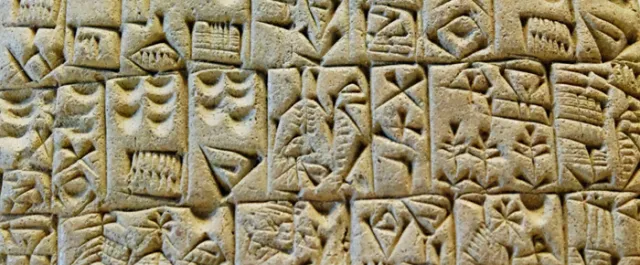
Telling the story of numbers
Describing quantities in terms other than "few" or "many," comparing them, manipulating them without touching or seeing them… All this depends on numbers. Numbers have preoccupied humankind since prehistoric times. So what is the story of the invention that changed the face of the world: numeral systems?
Read → History and CultureN°185Nov 21, 2018
Knot theory according to Jean-Michel Othoniel
Jean-Michel Othoniel is an original sculptor in more ways than one. His exhibition "Géométries amoureuses" was held in Sète (Hérault) in 2017, and his current exhibition "Face à l'obscurité" has just closed at the MAMC in Saint-Etienne (Loire).
Read → History and CultureN°68Oct 12, 2018
The Villani report on AI
Last March, mathematician and member of parliament Cédric Villani oversaw the drafting of a report on artificial intelligence (AI), a kind of "roadmap" charting the field's current state and future.
Read →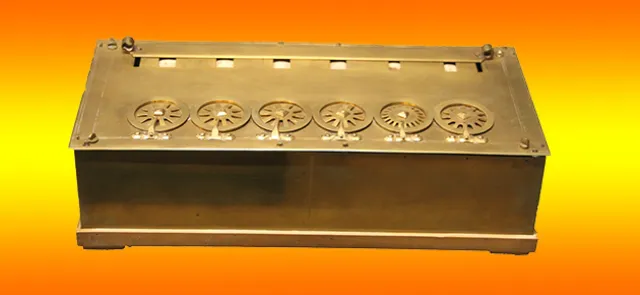 Math for everyoneN°184Sep 24, 2018
The mechanics of calculation
To calculate faster and more accurately, humans created devices as ingenious as they were varied! It can be hard to imagine that, only a few centuries ago, machines were expensive and cumbersome. Sophisticated calculations were therefore the preserve of an elite.
Read → Math for everyoneN°183Jul 17, 2018
Reasoning means solving
Reasoning means organizing your thoughts. Yes, but how? Are there methods for keeping our thoughts from descending into anarchy and confusion? Mathematics is, by its very nature, the discipline that has enabled us to answer these questions over the centuries. And it works!
Read → Math for everyoneN°183Jul 17, 2018
The different geometries of footballs
Every World Cup has its own ball. But while the ball's colors and technical features take center stage, let's not forget the mathematics hidden within!
Read → Math for everyoneN°67Jun 28, 2018
Biodiversity in equations
Biodiversity is life. Quantifying it at a given point in time is useful, but predicting how it will change is better—and mathematical modeling allows us to do just that.
Read → History and CultureN°182May 17, 2018
Archimedes' time
Once again, we turn to a "spiral"—not in a field or on a canvas, but… inside a watch.
Read → Games and ChallengesN°182May 17, 2018
Could nature be mathematical?
Another form of optical art is found in the famous crop circles, or "crop formations" (technically known as agroglyphs). These geometric patterns, most often created in cereal fields, range in size from a few square metres to several hectares. They are made by cutting, twisting or bending stalks of grain, usually at night and in record time.
Read → Math for everyoneN°182May 17, 2018
Kinetic art returns
The last time Argentine sculptor and painter Julio Le Parc exhibited in New York was in 1973. The artist has just brought a successful exhibition in Paris to a close at the Perrotin gallery in the 3rd arrondissement. In the meantime, kinetic art had faded from view.
Read → Math for everyoneN°182May 17, 2018
APMEP's promising new publication
At last, the new journal of the Association des professeurs de mathématiques de l'enseignement public (APMEP) has arrived!
Read → Math for everyoneN°167Apr 02, 2018
The weight of maths, the shock of reality
Read →