



FRANCOIS LAVALLOU
64 articles published in Tangente
 Math for everyoneN°92Dec 03, 2024
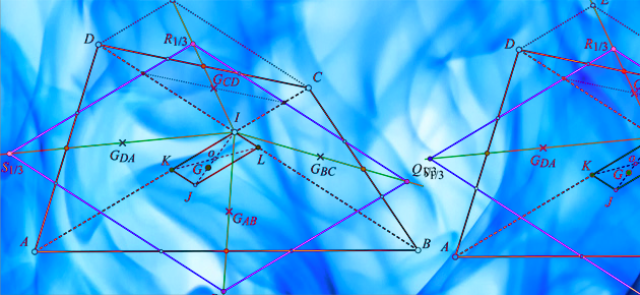
Convex quadrilaterals
Three sides completely determine a triangle, up to orientation. With four sides, infinitely many polygons can be constructed. Nevertheless, many general properties can be established for arbitrary convex quadrilaterals.
Read →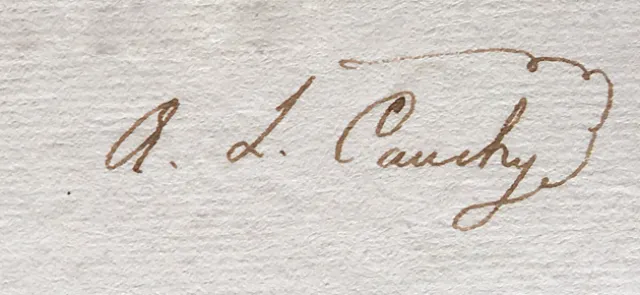 Math for everyoneN°91Aug 25, 2024
The beginnings of group theory
Cauchy the analyst is well known; Cauchy the algebraist, much less so. Cauchy's contribution to group theory long went unrecognized, even though his research on algebraic structures was highly influential.
Read → Math for everyoneN°91Aug 24, 2024
Counting by substitution
At barely 25, Cauchy puts the finishing touches to a paper on symmetric functions that is eventually published as two articles. In it, he introduces new concepts, notation and methods, and creates the calculus of substitutions, which will play a central role in the development of group theory.
Read → Math for everyoneN°90May 07, 2024
Almost everything is normal
Looking at the distribution of a number's decimal digits leads to the definition of "normal" numbers.
Read →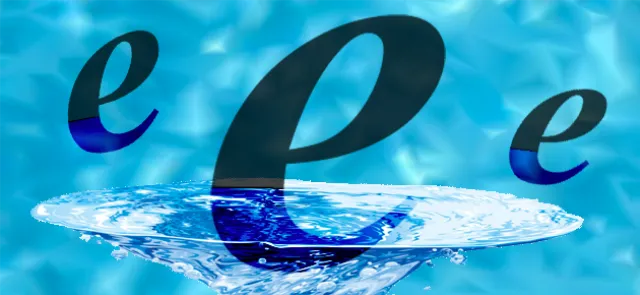 History and CultureN°90May 03, 2024
The story of e
At the beginning of the 17th century, Galileo's telescopes and Newton's theories sparked an explosion in observations of the heavens. New mathematical tools were devised to handle the associated calculations, which were astronomical in every sense. Euler's number emerged naturally from this work.
Read → Math for everyoneN°217Apr 10, 2024
Trends in sports performance
Citius, altius, fortius. The Olympic motto ("Faster, higher, stronger") sums up athletes' ambition to push the limits of human capabilities; for more than a century of competition, they have regularly broken records.
Read → Math for everyoneN°217Apr 10, 2024
The Hungarian tables
Combined events in athletics, such as the decathlon, require a way of comparing results across different disciplines. Scoring tables were therefore developed from statistical data and are regularly updated to reflect changes in human physical development.
Read →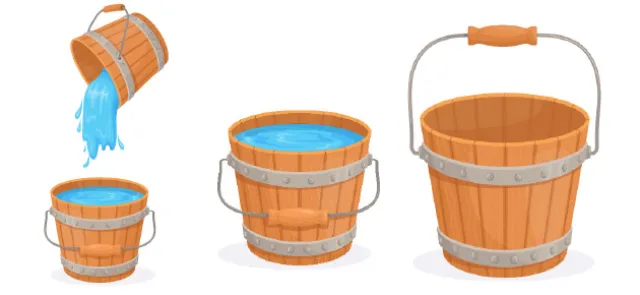 Math for everyoneN°217Apr 09, 2024
Billiards and water-pouring problems
One facet of mathematical creativity is finding an original representation of a problem that makes it easy to solve. Thus, an elementary Diophantine equation can be solved by studying trajectories on a billiard table, turning billiards into an effective tool.
Read → Math for everyoneN°217Apr 09, 2024
Sport and longevity
Age is, of course, a predominant factor in athletic (and intellectual!) performance. This nonlinear decline can be modeled using an exponential model, which seems to hold at every physiological scale: cellular, skeletal, pulmonary…
Read → History and CultureN°89Feb 17, 2024
The Egyptian way
Although the general concept of a fraction was absent from the mathematics of early antiquity, Egyptian scribes made extensive use of what we call unit fractions, or reciprocals of integers. Further developed by Fibonacci, this so-called "elementary" mathematics remains an active subject of research in number theory.
Read → History and CultureN°211Apr 21, 2023
The sphere effect
The sphere came to be seen as a model of the world because of its perfection. Greek mathematicians soon sought to measure its properties, laying the groundwork for calculation techniques that would not bear fruit until centuries later.
Read → Math for everyoneN°84Nov 17, 2022
Touching circles
Euclid's Elements, the standard reference for centuries, established straightedge-and-compass proof as the norm in geometry. But many problems involving circles tangent to one another become simpler when using conics or transformations, such as the indispensable inversion.
Read →