



Hervé Lehning
90 articles published in Tangente
 Math for everyoneN°175Mar 23, 2017
Newton's formula
What a legacy! Newton's binomial formula finds applications in both trigonometry and probability…
Read → Math for everyoneN°62Feb 15, 2017
The saga of economic indicators 2
What does the consumer price index—the famous "housewife's shopping basket"—really measure?
Read → History and CultureN°62Feb 15, 2017
Markov chains and workforce management
Markov chains are used to model memoryless probabilistic processes. By modelling internal promotions, they can help analyse and develop workforce management policies in very large companies.
Read →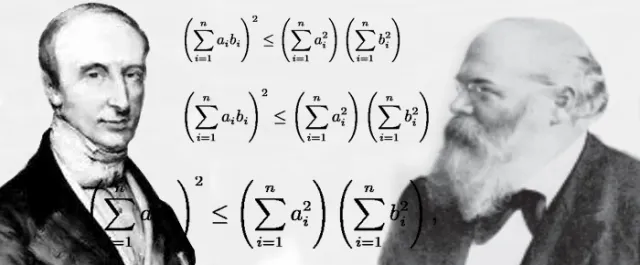 Math for everyoneN°174Jan 16, 2017
No derivatives required: optimization for everyone!
Optimization and differentiation are linked—but in both algebra and geometry, derivatives can sometimes be avoided. A few elementary algebraic examples will show us that quadratics are often subtler than they look…
Read → Math for everyoneN°173Nov 22, 2016
Recursion: to program is to prove!
Recursion may seem like an arcane method to the uninitiated, but it makes programs easier to prove correct, and therefore safer. The key principle is that, with recursion, to program is to prove! Sorting a deck of cards illustrates this perfectly…
Read → Math for everyoneN°173Nov 22, 2016
RSA encryption
RSA underpins the encryption of financial transactions.
Read → Math for everyoneN°173Nov 22, 2016
Putting Fermat's little theorem into practice
Fermat's little theorem is used to test whether a number is prime. Here is how.
Read → Math for everyoneN°173Nov 21, 2016
Simulation and proof: two complementary approaches
Some problems involving chance are easier to solve by simulation... but a proof is always more convincing! Although simulation produces a result more quickly in practice, the value of a theoretical study lies in its generality.
Read → Math for everyoneN°61Oct 07, 2016
The multiplicity of infinities
Actual infinity is a mathematical fiction, useful in calculations and proofs alike. We may reject it and make do with potential infinity. But if we accept the notion of infinity, there must be more than one. Georg Cantor—him again!—proved it.
Read → History and CultureN°61Oct 07, 2016
The ternary Cantor set
Cantor constructed a fractal set before fractals had a name, showing that a subset of the real line can have the cardinality of the continuum, have measure zero, and have empty interior.
Read → Math for everyoneN°61Oct 05, 2016
The set and its subsets
Elementary operations on sets include inclusion, union, intersection and symmetric difference. The notion of a power set is equally natural and fruitful. How can we describe, count and structure the subsets of a set?
Read → Math for everyoneN°61Oct 04, 2016
The axiom of choice
Being able to choose an element from a set seems natural. But it is truly natural only when the set is finite. Beyond that, an axiom is needed before we can choose! Some consequences of this axiom are surprising, so… should we accept it?
Read →